
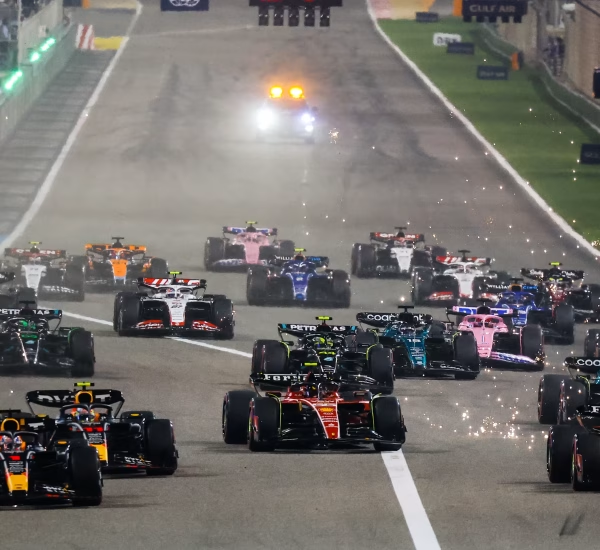
A great season does not need perfection. It needs tension that refuses to go away. For American fans, a championship race becomes special when every week feels connected to the last one, every mistake carries weight, and every contender looks beatable at the wrong moment. That is the pull. You are not only watching wins and losses; you are watching pressure slowly expose who has depth, patience, leadership, and nerve. In a sports culture shaped by NFL playoff pushes, college football rankings, MLB pennant battles, NBA seeding races, and NASCAR points drama, the chase matters because it gives fans something to argue about long before the trophy appears. Strong sports media coverage adds fuel by turning standings, injuries, rivalries, and late-season shifts into a weekly conversation. The best races do not move in a straight line. They tighten, bend, crack open, and tighten again. That uncertainty is what keeps people checking scores they did not plan to care about.
Why a Championship Race Feels Bigger When the Lead Keeps Changing
A season with one runaway favorite can still produce greatness, but it rarely creates the same national buzz as a close chase. American sports fans love dominance when it belongs to their team, yet neutral fans need movement. A changing lead gives everyone permission to believe the story is still alive.
Lead changes make every result feel connected
A tight standings battle turns ordinary games into shared evidence. A Sunday night NFL result can change Monday morning talk shows, fantasy league debates, sports radio calls, and office conversations across the country. One missed field goal or late interception stops being an isolated play and becomes part of a larger argument about who can survive pressure.
That connection is what makes a title race feel alive. Fans begin tracking opponents, schedules, injury reports, road trips, and tiebreakers because every piece seems to matter. The game on the screen becomes bigger than itself, which is exactly when casual viewers start acting like experts.
The strange part is that constant lead changes can make teams look weaker while making the race stronger. No contender appears untouchable. That is the hidden gift. Flaws keep the door open, and open doors keep people watching.
Uncertainty gives fans a reason to return
A close race creates a rhythm that rewards attention. You watch one game because it affects another. You follow one team because it changes the path for three more. The season starts to feel like a long argument where nobody gets the final word until the last possible moment.
American fans understand this from MLB wild-card races and college football playoff debates. A team can win and still feel nervous. Another can lose and still stay alive because someone else slipped too. That constant recalculation gives the season its pulse.
The lead does not need to change every week to matter. It only needs to feel vulnerable. A small gap, a hard schedule, or one star playing hurt can make first place feel less like safety and more like bait.
How Rivalries, Stakes, and Pressure Shape the Middle Stretch
Once the early excitement fades, the middle of a season often decides whether fans stay emotionally locked in. This is where the race either gains depth or turns into scoreboard noise. The strongest seasons build layers: personal history, regional pride, playoff math, and the quiet fear that one bad week can undo two months of work.
Rivalry games turn standings into emotion
Rivalries give the standings teeth. A division matchup in the NFL, a Yankees-Red Sox series in September, or a Duke-North Carolina game near tournament seeding time carries more than math. The result lands harder because the opponent already means something to the fan base.
That emotional history changes how pressure feels. Losing to a random opponent frustrates fans. Losing to a rival bruises them. It creates messages from friends, clips on social media, loud local shows, and a week of second-guessing that does not fade after the final whistle.
Rivalry games also expose which contenders can handle noise. Talent can win quiet games. Composure wins hostile ones. When a team walks into a loud stadium and performs cleanly, fans believe in them a little more.
The middle stretch rewards steady teams, not loud ones
Midseason is where hype starts paying rent. A team can talk big in September or October, but the middle stretch asks for repeatable habits. Can the offensive line hold up? Can the bullpen survive heavy use? Can the bench protect a lead when starters sit?
This is where a championship race separates teams with headlines from teams with staying power. The flashiest roster does not always age well across a long schedule. Travel, fatigue, minor injuries, and scouting reports grind away at weak spots until everyone can see them.
One overlooked truth: boring teams often become dangerous here. A team that avoids drama, protects possession, wins at home, and beats weaker opponents may not trend every night. Then suddenly it sits near the top, and people realize discipline has been stacking wins in silence.
What Separates Real Contenders From Temporary Stories
Not every team near the top belongs there. Some rise on a hot streak, a soft schedule, or one player carrying an unreasonable load. The fun comes from figuring out who is built to last and who is borrowing time before the race turns cruel.
Depth matters more when the schedule gets heavy
Depth is the difference between surviving a rough patch and becoming one. In the NBA, a contender cannot depend on its stars playing heavy minutes every night without paying for it later. In baseball, a thin pitching staff eventually gets exposed when series pile up and travel gets ugly.
Fans often notice depth only when it fails. A backup corner gets targeted. A second-unit guard cannot organize the offense. A reliever enters with two runners on and no command. Those moments look small until they decide playoff position.
Strong depth also changes how coaches behave. They can rest key players without surrendering games, adjust matchups without panic, and absorb injuries without changing the team’s identity. That flexibility keeps a contender from living one bad break away from collapse.
Coaching decisions become louder under stress
Pressure makes every coaching choice feel public. Fourth-down calls, bullpen changes, substitution patterns, timeout use, rotation tweaks, and late-game matchups all become evidence in the fan court. A coach can make the same decision in April and barely draw a comment. Make it in a tight race, and it becomes a week-long trial.
The best coaches do not chase applause during this stretch. They understand the difference between a bold decision and a desperate one. They also know when to protect a player from a bad matchup instead of proving trust for the sake of optics.
That kind of judgment rarely shows up in highlight packages, but fans feel it over time. A well-coached team loses fewer avoidable games. It does not always win the dramatic ones, but it gives itself cleaner chances when the margin gets thin.
Why the Final Stretch Turns Fans Into Believers or Skeptics
The late season changes the emotional temperature. Earlier losses could be explained away. Now every result feels like evidence. Fans stop asking who has potential and start asking who can close. This is where a championship race becomes less about promise and more about nerve.
Late-season pressure exposes the truth
Pressure does not create flaws from nowhere. It reveals what a team has been hiding. A shaky defense becomes harder to ignore. A star with poor decision-making gets trapped into tougher choices. A locker room with weak leadership starts leaking frustration.
American sports fans have seen this pattern for years. A team can dominate early and still tighten up when the finish line appears. Another team can look uneven for months, then settle into a rhythm when the stakes rise. The final stretch rewards teams that know who they are.
The surprise is that pressure can help the right team. It strips away experiments, forces honest rotations, and turns vague goals into direct assignments. Win this series. Protect this lead. Beat this opponent. Clarity can calm a group that spent months trying to prove too many things at once.
Fans remember the finish more than the math
The standings tell you what happened, but the finish tells you how it felt. A late comeback, a final-week clinch, a road win against a rival, or a star delivering with the season on the line becomes the memory fans carry. Numbers matter, yet moments make the story portable.
That is why close races spread beyond loyal fan bases. People who barely followed the first half begin tuning in because the finish feels easy to understand. Someone is chasing. Someone is slipping. Someone needs help. Someone has one last chance.
The best endings also give fans a clean emotional payoff. Even heartbreak has shape when the race was worth watching. You may hate the result, but you remember the ride, and that is the point of sports at its loudest.
A great season asks fans to care before certainty arrives. That is the real power of a championship race: it gives every game a thread, every contender a flaw, and every fan a reason to keep checking what changed overnight. The teams that make the chase unforgettable are not always the cleanest, richest, or most talked about. They are the ones that keep answering pressure with proof. For fans, the next step is simple: stop watching only the standings and start watching the behavior behind them. The race becomes richer when you notice who bends, who steadies, and who still wants the ball when the whole country is watching.
Frequently Asked Questions
What makes a championship race exciting for American sports fans?
Uncertainty keeps fans invested. A close race gives every game meaning, especially when contenders trade leads, rivals interfere, and late-season pressure changes the standings. Fans stay hooked because the outcome feels alive rather than settled too early.
Why do close title races attract casual viewers?
Casual viewers join when the story becomes easy to follow. A tight race creates clear stakes: one team is chasing, another is protecting a lead, and every result changes the mood. That simplicity makes the drama easy to enter.
How do rivalries affect a close sports race?
Rivalries add emotion to the standings. A win over a rival can energize a fan base, while a loss can create doubt that lasts all week. The history between teams makes each result feel larger than the record.
Why does depth matter during a long title chase?
Depth protects teams from fatigue, injuries, and schedule pressure. A strong bench or backup group lets coaches manage key players without giving away games. Over time, that support often separates true contenders from short-term surprises.
How does pressure change teams near the end of a season?
Pressure reveals habits that were easier to miss earlier. Smart teams become sharper because roles are clear. Fragile teams start making rushed decisions, losing discipline, or depending too much on one star to rescue them.
What role do coaches play in championship races?
Coaches shape close races through timing, matchups, rest, and late-game judgment. The best ones avoid panic and make choices that fit the team’s strengths. Poor decisions become harder to survive when every game affects the finish.
Why do fans care so much about standings late in the season?
Late-season standings carry emotional weight because time is running out. A small gap can decide home-field advantage, playoff seeding, or elimination. Fans track every result because the margin for error becomes painfully narrow.
What is the best way to follow a title race from start to finish?
Watch more than wins and losses. Track injuries, schedule difficulty, road performance, rival matchups, and how teams respond after bad results. Those clues show which contenders are built for the finish and which ones are running on fumes.A great season does not need perfection. It needs tension that refuses to go away. For American fans, a championship race becomes special when every week feels connected to the last one, every mistake carries weight, and every contender looks beatable at the wrong moment. That is the pull. You are not only watching wins and losses; you are watching pressure slowly expose who has depth, patience, leadership, and nerve. In a sports culture shaped by NFL playoff pushes, college football rankings, MLB pennant battles, NBA seeding races, and NASCAR points drama, the chase matters because it gives fans something to argue about long before the trophy appears. Strong sports media coverage adds fuel by turning standings, injuries, rivalries, and late-season shifts into a weekly conversation. The best races do not move in a straight line. They tighten, bend, crack open, and tighten again. That uncertainty is what keeps people checking scores they did not plan to care about.
Why a Championship Race Feels Bigger When the Lead Keeps Changing
A season with one runaway favorite can still produce greatness, but it rarely creates the same national buzz as a close chase. American sports fans love dominance when it belongs to their team, yet neutral fans need movement. A changing lead gives everyone permission to believe the story is still alive.
Lead changes make every result feel connected
A tight standings battle turns ordinary games into shared evidence. A Sunday night NFL result can change Monday morning talk shows, fantasy league debates, sports radio calls, and office conversations across the country. One missed field goal or late interception stops being an isolated play and becomes part of a larger argument about who can survive pressure.
That connection is what makes a title race feel alive. Fans begin tracking opponents, schedules, injury reports, road trips, and tiebreakers because every piece seems to matter. The game on the screen becomes bigger than itself, which is exactly when casual viewers start acting like experts.
The strange part is that constant lead changes can make teams look weaker while making the race stronger. No contender appears untouchable. That is the hidden gift. Flaws keep the door open, and open doors keep people watching.
Uncertainty gives fans a reason to return
A close race creates a rhythm that rewards attention. You watch one game because it affects another. You follow one team because it changes the path for three more. The season starts to feel like a long argument where nobody gets the final word until the last possible moment.
American fans understand this from MLB wild-card races and college football playoff debates. A team can win and still feel nervous. Another can lose and still stay alive because someone else slipped too. That constant recalculation gives the season its pulse.
The lead does not need to change every week to matter. It only needs to feel vulnerable. A small gap, a hard schedule, or one star playing hurt can make first place feel less like safety and more like bait.
How Rivalries, Stakes, and Pressure Shape the Middle Stretch
Once the early excitement fades, the middle of a season often decides whether fans stay emotionally locked in. This is where the race either gains depth or turns into scoreboard noise. The strongest seasons build layers: personal history, regional pride, playoff math, and the quiet fear that one bad week can undo two months of work.
Rivalry games turn standings into emotion
Rivalries give the standings teeth. A division matchup in the NFL, a Yankees-Red Sox series in September, or a Duke-North Carolina game near tournament seeding time carries more than math. The result lands harder because the opponent already means something to the fan base.
That emotional history changes how pressure feels. Losing to a random opponent frustrates fans. Losing to a rival bruises them. It creates messages from friends, clips on social media, loud local shows, and a week of second-guessing that does not fade after the final whistle.
Rivalry games also expose which contenders can handle noise. Talent can win quiet games. Composure wins hostile ones. When a team walks into a loud stadium and performs cleanly, fans believe in them a little more.
The middle stretch rewards steady teams, not loud ones
Midseason is where hype starts paying rent. A team can talk big in September or October, but the middle stretch asks for repeatable habits. Can the offensive line hold up? Can the bullpen survive heavy use? Can the bench protect a lead when starters sit?
This is where a championship race separates teams with headlines from teams with staying power. The flashiest roster does not always age well across a long schedule. Travel, fatigue, minor injuries, and scouting reports grind away at weak spots until everyone can see them.
One overlooked truth: boring teams often become dangerous here. A team that avoids drama, protects possession, wins at home, and beats weaker opponents may not trend every night. Then suddenly it sits near the top, and people realize discipline has been stacking wins in silence.
What Separates Real Contenders From Temporary Stories
Not every team near the top belongs there. Some rise on a hot streak, a soft schedule, or one player carrying an unreasonable load. The fun comes from figuring out who is built to last and who is borrowing time before the race turns cruel.
Depth matters more when the schedule gets heavy
Depth is the difference between surviving a rough patch and becoming one. In the NBA, a contender cannot depend on its stars playing heavy minutes every night without paying for it later. In baseball, a thin pitching staff eventually gets exposed when series pile up and travel gets ugly.
Fans often notice depth only when it fails. A backup corner gets targeted. A second-unit guard cannot organize the offense. A reliever enters with two runners on and no command. Those moments look small until they decide playoff position.
Strong depth also changes how coaches behave. They can rest key players without surrendering games, adjust matchups without panic, and absorb injuries without changing the team’s identity. That flexibility keeps a contender from living one bad break away from collapse.
Coaching decisions become louder under stress
Pressure makes every coaching choice feel public. Fourth-down calls, bullpen changes, substitution patterns, timeout use, rotation tweaks, and late-game matchups all become evidence in the fan court. A coach can make the same decision in April and barely draw a comment. Make it in a tight race, and it becomes a week-long trial.
The best coaches do not chase applause during this stretch. They understand the difference between a bold decision and a desperate one. They also know when to protect a player from a bad matchup instead of proving trust for the sake of optics.
That kind of judgment rarely shows up in highlight packages, but fans feel it over time. A well-coached team loses fewer avoidable games. It does not always win the dramatic ones, but it gives itself cleaner chances when the margin gets thin.
Why the Final Stretch Turns Fans Into Believers or Skeptics
The late season changes the emotional temperature. Earlier losses could be explained away. Now every result feels like evidence. Fans stop asking who has potential and start asking who can close. This is where a championship race becomes less about promise and more about nerve.
Late-season pressure exposes the truth
Pressure does not create flaws from nowhere. It reveals what a team has been hiding. A shaky defense becomes harder to ignore. A star with poor decision-making gets trapped into tougher choices. A locker room with weak leadership starts leaking frustration.
American sports fans have seen this pattern for years. A team can dominate early and still tighten up when the finish line appears. Another team can look uneven for months, then settle into a rhythm when the stakes rise. The final stretch rewards teams that know who they are.
The surprise is that pressure can help the right team. It strips away experiments, forces honest rotations, and turns vague goals into direct assignments. Win this series. Protect this lead. Beat this opponent. Clarity can calm a group that spent months trying to prove too many things at once.
Fans remember the finish more than the math
The standings tell you what happened, but the finish tells you how it felt. A late comeback, a final-week clinch, a road win against a rival, or a star delivering with the season on the line becomes the memory fans carry. Numbers matter, yet moments make the story portable.
That is why close races spread beyond loyal fan bases. People who barely followed the first half begin tuning in because the finish feels easy to understand. Someone is chasing. Someone is slipping. Someone needs help. Someone has one last chance.
The best endings also give fans a clean emotional payoff. Even heartbreak has shape when the race was worth watching. You may hate the result, but you remember the ride, and that is the point of sports at its loudest.
A great season asks fans to care before certainty arrives. That is the real power of a championship race: it gives every game a thread, every contender a flaw, and every fan a reason to keep checking what changed overnight. The teams that make the chase unforgettable are not always the cleanest, richest, or most talked about. They are the ones that keep answering pressure with proof. For fans, the next step is simple: stop watching only the standings and start watching the behavior behind them. The race becomes richer when you notice who bends, who steadies, and who still wants the ball when the whole country is watching.
Frequently Asked Questions
What makes a championship race exciting for American sports fans?
Uncertainty keeps fans invested. A close race gives every game meaning, especially when contenders trade leads, rivals interfere, and late-season pressure changes the standings. Fans stay hooked because the outcome feels alive rather than settled too early.
Why do close title races attract casual viewers?
Casual viewers join when the story becomes easy to follow. A tight race creates clear stakes: one team is chasing, another is protecting a lead, and every result changes the mood. That simplicity makes the drama easy to enter.
How do rivalries affect a close sports race?
Rivalries add emotion to the standings. A win over a rival can energize a fan base, while a loss can create doubt that lasts all week. The history between teams makes each result feel larger than the record.
Why does depth matter during a long title chase?
Depth protects teams from fatigue, injuries, and schedule pressure. A strong bench or backup group lets coaches manage key players without giving away games. Over time, that support often separates true contenders from short-term surprises.
How does pressure change teams near the end of a season?
Pressure reveals habits that were easier to miss earlier. Smart teams become sharper because roles are clear. Fragile teams start making rushed decisions, losing discipline, or depending too much on one star to rescue them.
What role do coaches play in championship races?
Coaches shape close races through timing, matchups, rest, and late-game judgment. The best ones avoid panic and make choices that fit the team’s strengths. Poor decisions become harder to survive when every game affects the finish.
Why do fans care so much about standings late in the season?
Late-season standings carry emotional weight because time is running out. A small gap can decide home-field advantage, playoff seeding, or elimination. Fans track every result because the margin for error becomes painfully narrow.
What is the best way to follow a title race from start to finish?
Watch more than wins and losses. Track injuries, schedule difficulty, road performance, rival matchups, and how teams respond after bad results. Those clues show which contenders are built for the finish and which ones are running on fumes.