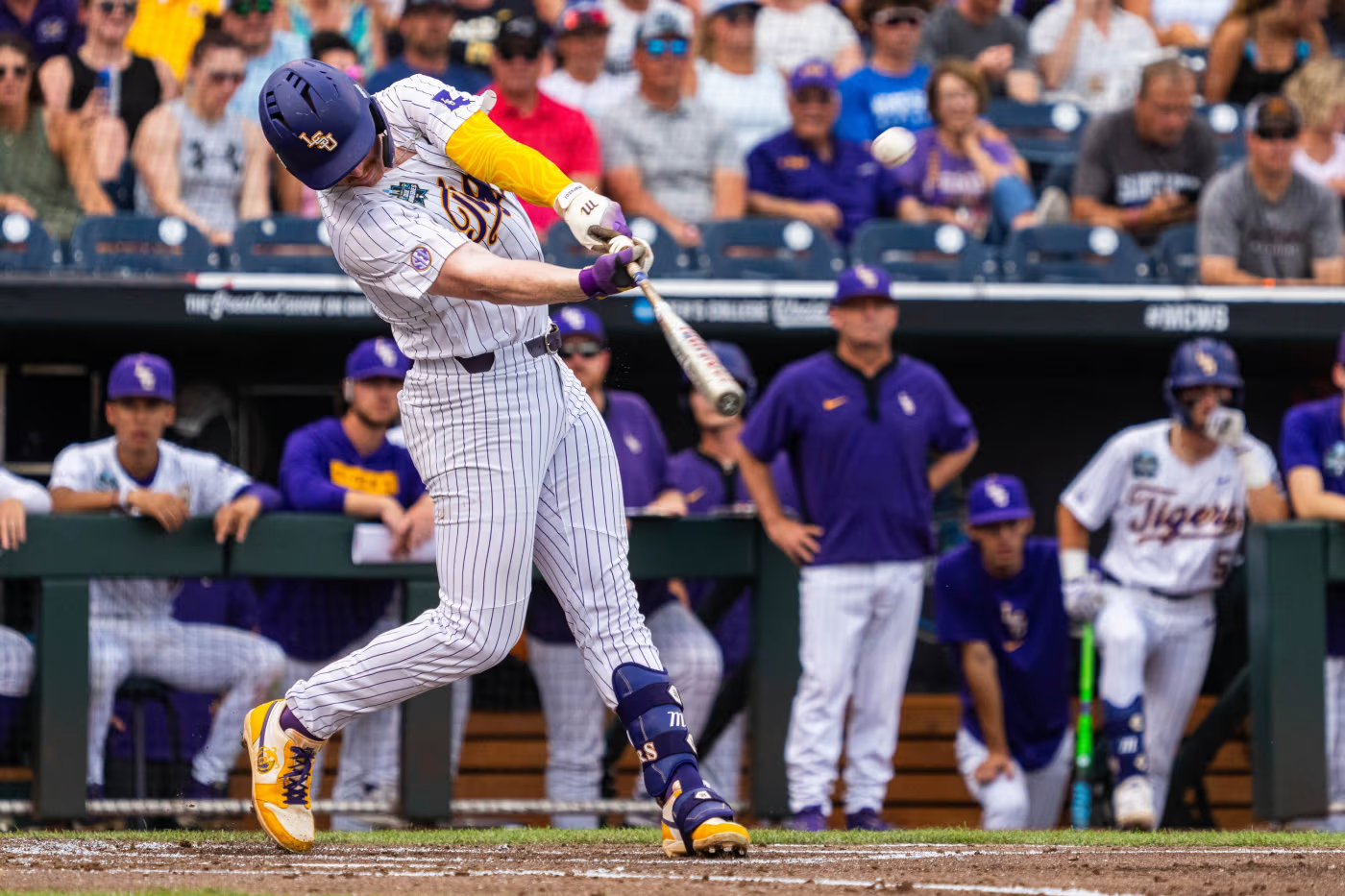
A baseball leaving the bat can make a stadium sound different. You hear it before you track it. With Aaron Judge, that sound is not an accident, and the home run mechanics behind it are worth studying because they are not built on wild effort. They are built on size, timing, balance, patience, and a swing that stays calm longer than most fans expect. The Aaron Judge swing is not a cartoon of brute force. It is a large athlete making small choices at high speed. For U.S. baseball fans, youth coaches, and weekend cage hitters, that matters. You cannot copy his height, reach, or natural strength, but you can study how his body stacks up before contact, how his barrel enters the zone, and why his best swings look almost relaxed. For readers who track sports performance analysis across American athletics, modern sports coverage often misses this quiet part: power starts before the highlight.
Home Run Mechanics Begin in the Load, Not the Arms
Most young hitters think power begins when the hands fire. That is backward. Judge’s swing starts gaining force when his body gathers pressure into the ground, holds posture, and creates space for the barrel to work. The friction is simple: the pitcher owns the clock, while the hitter has to stay ready without jumping early. Judge solves that problem with a load that looks big but acts controlled.
Why Judge’s Leg Lift Gives Him Time Without Rushing
Judge’s leg lift is easy to notice because he is 6-foot-7, so every movement looks larger than it would on a smaller hitter. Yet the value is not drama. The lift gives him rhythm. It lets his body begin moving before the pitch reaches the hitting window, so he is not starting from a dead stop when he decides to swing.
That is one reason the Aaron Judge swing can look patient against velocity. His front side gathers, his back hip holds, and his head stays quieter than you would expect from a hitter with that much range. Many high school hitters lift the leg and drift. Judge lifts, gathers, and waits.
The non-obvious part is that a bigger move can create more calm. A small toe tap can become rushed if the hitter has no internal rhythm. Judge’s move gives him a clear clock. He does not need to panic at release because his body has already started its timing sequence.
How the Back Hip Stores the Real Force
The back hip is the hinge in Judge’s move. When he loads, he does not sink into a weak squat or spin open too soon. He turns enough to store force, then keeps his torso from leaking toward the pitcher. That tension gives the swing a clean handoff from lower body to barrel.
You can see the same lesson in batting cages across the U.S. A big travel-ball player may crush slow pitches but miss firm fastballs because his hips open before his hands can stay connected. Judge avoids that trap. His lower half starts the chain, but it does not run away from the rest of the body.
This is where baseball swing mechanics become less about muscle and more about order. The body has to pass energy upward without spilling it. Judge’s size helps, but the sequence makes the size usable. Loose power beats tense power because the barrel arrives on time.
The Barrel Path That Makes the Strike Zone Feel Smaller
After the load, the next question is path. Judge does not need to cover the plate like a slap hitter. He needs his barrel to spend enough time through the hitting area that he can damage mistakes in different lanes. The tension here is harsh: pitchers attack him with changing speeds, high fastballs, sliders away, and inside pitches meant to tie up those long arms. His answer is not one magic move. It is a barrel path that gives him options.
Why His Hands Stay Back Longer Than Fans Think
The most common mistake in reading Judge is thinking his swing is long because his body is long. His swing can cover a lot of distance, but that does not mean it is late or loose. His hands stay loaded while his lower half begins to open, which lets the barrel enter with speed instead of being dragged across the plate.
That delay matters against major-league fastballs. If the hands fire too soon, the hitter commits early and loses the ability to adjust. Judge can let the ball travel, especially on pitches away, because his hands have not spent all their speed too early.
A good real-world example came from many of his opposite-field home runs at Yankee Stadium. Those swings do not look like emergency pokes. They look like full strikes sent the other way. That is not luck. That is a hitter keeping his direction through the ball long enough to drive it without selling out for the pull side.
What the Swing Plane Says About Modern Power
Modern hitters hear plenty about launch angle, but the phrase gets abused. Judge is not trying to lift every ball into the clouds. His better swings match the pitch plane, meet the ball with the barrel climbing through contact, and create the kind of flight that carries instead of floating.
The MLB Statcast glossary explains barrels as batted balls with the right blend of exit velocity and launch angle, which is a better way to think about Judge than raw strength alone. A ball hit hard into the ground may impress in batting practice, but it does not scare the bleachers. A ball hit high without force dies on the warning track.
Here is the counterintuitive piece: Judge’s path is dangerous because it is not built only for the perfect pitch. It gives him damage chances on pitches that other hitters foul back, roll over, or miss. The barrel does not need to be perfect for long. It needs to be on time for inches.
Timing, Vision, and the Courage to Take Pitches
Power hitters often get painted as guessers. Judge is not that simple. His best at-bats show a hitter who understands the strike zone and accepts the cost of patience. That cost can be ugly. A taken strike in New York gets groans. A strikeout gets replayed. But the same patience forces pitchers into dangerous counts and gives Judge a better pitch to punish.
Why Plate Discipline Adds Power Instead of Taking It Away
Plate discipline is not passive hitting. For Judge, it is a way to keep his swing built for damage. If he chases early, his size becomes a weakness because long limbs have to reach away from the body. If he makes the pitcher enter his zone, those same limbs become a weapon.
This is why exit velocity does not tell the whole story by itself. The ball leaves the bat faster when the hitter meets it in the right place. Judge’s power comes from refusing to donate swings on pitches that would pull his barrel out of sequence.
Think of a 13-year-old in a U.S. tournament trying to copy a major-league slugger. The kid often swings harder, not smarter. Judge’s better model is this: shrink the hunt area, stay loaded, and attack the pitch you can drive. Power grows when the hitter stops helping the pitcher.
How Tall Hitters Survive the Inside Pitch
Pitchers love to challenge tall hitters inside because long arms need room. The old idea says you can beat a big hitter by crowding him. That works when the hitter’s hands cast away from the body. Judge survives inside by keeping the hands close enough to turn the barrel tight.
That does not mean inside pitches are easy for him. No elite hitter owns every lane. But Judge’s posture lets him rotate without folding over the plate. His front shoulder can stay closed long enough for his hands to work, then the barrel snaps through with less wasted space.
The non-obvious lesson is that Judge’s height does not only create reach. It creates a bigger strike-zone challenge. He has more zone to defend than a shorter hitter, so his selectivity has to be sharper. His power is tied to judgment, not separate from it.
What Young Hitters Should Copy and What They Should Ignore
The mistake is trying to become Aaron Judge by copying the outline of his swing. The better path is to copy the principles. His frame is rare. His strength is rare. His bat speed sits in a range most players will never touch. Still, his order, patience, and barrel discipline teach lessons that fit a high school cage in Texas, a college program in California, or a Little League field in Pennsylvania.
The Parts of Judge’s Move That Translate to Regular Players
A regular hitter can copy Judge’s balanced gather. That does not mean using the same leg lift. It means learning to move before the pitch arrives while keeping the head steady. A hitter with a toe tap can do it. A hitter with a small stride can do it. The method can change while the principle stays.
A regular hitter can also copy his direction. Judge does not yank his head toward left field when he wants pull-side power. He stays through the middle first. That gives him room to hit the ball where it is pitched, which is why baseball training guides should teach contact direction before they teach home-run posing.
One more part travels well: his patience under pressure. Young hitters love cage rounds where every pitch sits belt high. Games are messier. Judge’s approach reminds you that the swing is only useful if the decision before it is clean.
The Parts You Should Not Try to Copy Blindly
Do not copy the size of Judge’s leg lift if it ruins your timing. Do not copy his hand height if your body cannot hold that slot. Do not copy his intent if you cannot control the strike zone. A smaller player who chases Judge’s finish may lose the compact move that makes him good.
The smarter route is to film your own swing from the open side and behind the plate. Look at when your front foot lands. Look at whether your head drifts. Look at whether your barrel enters the zone with speed or gets pushed by the hands. Those checks matter more than copying a superstar silhouette.
This is where baseball swing mechanics become personal. Judge gives you a model of sequence, not a costume. The goal is not to look like him. The goal is to understand why his move works, then find the version your body can repeat when a pitcher is trying to embarrass you.
Conclusion
The loudest swings often have the quietest beginnings. Judge’s power comes from a patient load, a connected turn, a barrel that stays useful, and a strike-zone plan that protects his best contact. That is why home run mechanics cannot be reduced to strength or bat speed alone. The swing works because the parts arrive in order. For American fans, that makes Judge more interesting than a big man hitting big baseballs. He shows how discipline can create violence without looking frantic. Coaches should teach that before they teach launch-angle talk. Players should feel it before they chase radar-gun numbers. Study the gather. Study the hips. Study the way his hands wait while the pitch tells the truth. Then build your own move, one piece at a time, and use MLB player development stories to compare how different hitters solve the same hard problem.
Frequently Asked Questions
How does Aaron Judge create so much power in his swing?
He creates power through timing, body size, hip rotation, and barrel accuracy. His strength matters, but the bigger secret is sequence. His lower body starts the move, his hands stay back, and the barrel arrives with force at the right contact point.
Is Aaron Judge’s swing good for young players to copy?
Parts of it are useful, but copying the whole shape can hurt a young hitter. Players should copy his balance, patience, and direction through contact. His leg lift, hand slot, and power intent need adjustment for each body type.
What makes Aaron Judge different from other power hitters?
His mix of size, strike-zone control, and opposite-field damage separates him. Many sluggers need pull-side mistakes. Judge can drive pitches to right-center with real carry, which makes pitchers defend more of the plate.
Does bat speed explain Aaron Judge’s home runs?
Bat speed helps, but it does not explain everything. A fast swing still needs timing, contact quality, and the right ball flight. Judge’s best swings turn speed into damage because the barrel meets the ball in a strong position.
Why does Aaron Judge hit so many balls hard?
He hits so many balls hard because he controls his body before contact. When his load, stride, hips, and hands stay connected, he can transfer force into the ball instead of wasting it through drifting or early rotation.
What can youth coaches teach from Aaron Judge’s swing?
Youth coaches can teach balance, rhythm, and strike-zone patience. Instead of telling players to swing harder, they can show how Judge gathers early, stays calm, and attacks pitches he can drive with his strongest move.
Is launch angle the main reason Aaron Judge hits home runs?
Launch angle matters, but it is only part of the answer. The ball also needs speed off the bat. Judge succeeds when his swing creates both, which is why barrels explain his power better than launch angle alone.
Why is Aaron Judge dangerous on outside pitches?
He stays through the middle of the field and lets the ball travel. That keeps his barrel in the hitting zone longer. When he does not rush, he can drive outside pitches with authority instead of reaching and losing power.