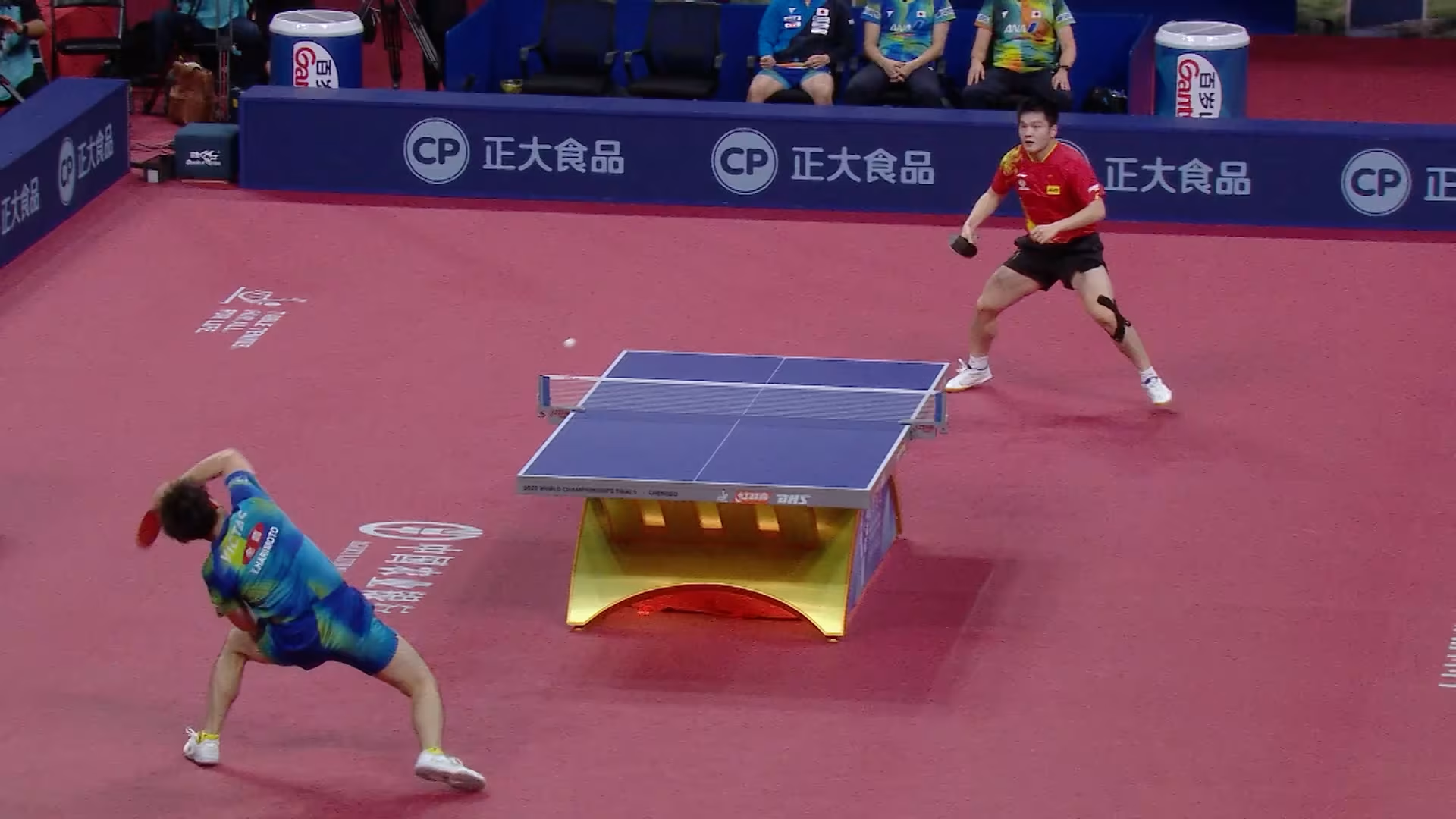
The first shock of a hard rally is not the sound. It is the feeling that the point has already moved on before your eyes have agreed on where the ball went. Table Tennis Speed feels unreal because the sport compresses distance, spin, decision-making, and body movement into a space smaller than most American living rooms. A baseball pitch may travel farther and hit higher radar numbers, yet a table tennis exchange gives you less room to breathe. The ball is light, the table is short, and the opponent can change direction with a wrist motion you barely notice. That is why fast-moving sports stories around racket sports often miss the best part: the drama is not raw force alone. It is how little time the player has to make a smart choice. Once you see the science, those impossible rallies stop looking like chaos. They start looking like trained prediction under pressure.
Table Tennis Speed Science Starts With Distance, Timing, and Panic
The main reason rallies look unreadable is simple: the table steals time. A tennis player has a full court to watch the ball travel. A baseball hitter sees the pitch from sixty feet away. A table tennis player may be only a few steps from the opponent, with the ball crossing the net in a blink. That short flight path turns a normal sports reaction into a tight race between vision, memory, and muscle.
The trap is that fans measure speed with distance in mind. They think of miles per hour, then compare sports as if the playing areas were equal. Table tennis breaks that habit. A lower top speed can still feel violent when the ball has almost no travel time and the next shot can come from either corner.
Why the table makes time disappear
A regulation table is nine feet long, so even a moderate attack reaches the other side before a casual viewer has finished tracking the bounce. The official ball is tiny and light, and the official ITTF laws list it as 40 millimeters across and 2.7 grams. That matters. A light ball slows faster than a baseball, but it also jumps off the racket with sharp changes in direction.
At a weekend tournament in California or Texas, you can stand ten feet from a table and still lose the ball during a clean counterloop exchange. The player at the table does not have that luxury. You miss one cue, and the ball is already past your hip.
Here is the odd part. The fastest-looking shot is not always the one that hurts you most. A flat smash may be visible because it travels on a more direct path. A shorter, brushed topspin can look slower, then kick after the bounce and crowd your body. The eye expects one route. The ball takes another.
Air also has a bigger say than many fans expect. Since the ball is light, a small spin change can alter the path before the bounce and the rebound after it. That is why a player can attack with a compact motion and still make the receiver look late. The shot did not need a huge backswing. It needed the right contact.
Reaction time in table tennis is trained before contact
Reaction time in table tennis is not a single reflex, like touching a hot pan. It is a chain. The player reads the shoulder, the racket face, the sound of contact, the first bounce, and the opponent’s balance. By the time the ball has crossed the net, the best players have already narrowed the answer to two or three likely replies.
This is why elite players do not look surprised as often as they should. They are not waiting to see the full shot. They are betting early, then making small corrections. That sounds risky, yet waiting for perfect visual proof is worse. By then, the point is gone.
You can spot the same skill in American club play, only at lower speed. Watch a strong player in a local league match return serve. They often move before the ball clears the net. New players call it guessing. It is not. It is pattern reading, and pattern reading is how the brain buys time when the clock refuses to.
The mind also edits out bad options. If the opponent is jammed near the backhand corner, the wide forehand attack may be less likely. If the racket opens under the ball, heavy backspin becomes more likely. Each clue cuts the menu down. The response feels instant because the player is not choosing from every possible shot.
Spin Turns Straight Shots Into Moving Riddles
Speed alone would be hard enough. Spin makes it cruel. A table tennis ball does not travel like a clean white dot through space. It bends, dips, jumps, checks, and slides because the racket rarely meets it square. The surface brushes the ball, and that brushing motion writes instructions the eye cannot read from the couch.
This is where the sport gets its bite. The ball may cross the table in a clean line, then act guilty after the bounce. It shoots forward, skids low, or drifts sideways. Fans see a missed return. Players feel a small physics problem arrive late.
Table tennis ball spin changes what your eyes expect
Table tennis ball spin is the hidden language of the sport. Topspin pulls the ball down and makes it leap forward after the bounce. Backspin can make the ball float, then stop or kick low. Sidespin drags the line sideways, which is why a serve that looks safe can run off the edge of the table.
This is the detail many casual viewers miss. The ball is not confusing only because it is fast. It is confusing because the same swing path can send different messages depending on racket angle and contact point. A small change at the wrist can turn a safe block into a ball that jumps into your elbow.
The rubber adds another layer. Smooth inverted rubber grabs the ball and rewards brushing contact, while pips-out rubber can send a flatter, stranger rebound. That equipment difference can make two similar strokes behave differently after the bounce. To the viewer, it looks like a mistake. To the receiver, it feels like the table changed its mind.
A familiar example shows up at community centers across the United States. A newer player faces an older player with a heavy sidespin serve. The serve is not loud. It may not look athletic. Then it lands, bends away, and the return shoots into the next table. The lesson arrives fast: spin can beat strength without raising its voice.
Why the slow ball can be harder than the smash
The counterintuitive truth is that a slow ball often asks a harder question. When a player crushes a ball flat, your job is limited. Get the racket there, close the angle, survive the pace. When a player floats a short, spinny ball, you must read depth, rotation, bounce height, and your own footwork all at once.
That is why table tennis ball spin punishes ego. Many adults who are strong in other sports walk into a gym and assume quick hands will carry them. Quick hands help, but they do not tell you whether the ball will kick up or dive into the net.
Good players respect the quiet ball. They know a soft receive can pull an attacker over the table and leave the next shot open. The rally may look slower for one second, yet the decision load gets heavier. The speed moved from the ball into the brain.
That is why the best serve receives in table tennis often look plain. A short touch, a half-long push, a small flick to the elbow. None of it fills a highlight reel at first glance. Then the next ball becomes easy, and you realize the point was shaped before the big swing ever arrived.
Broadcast Cameras Make the Rally Look Even Faster
The player sees a set of clues. The viewer sees a blur. That gap explains why table tennis can look harder on a screen than in person. Broadcast angles flatten depth, shrink racket motion, and make the white ball blend into lights, shirts, and table lines. Your brain gets less context than the athlete gets at the table.
Television also favors the whole rally over the tiny cause. That is fair for storytelling, but rough for understanding. The camera wants both players in frame. The science lives closer to the racket.
Fast ping pong rallies look different from the couch
Fast ping pong rallies on television often feel like magic tricks because the camera sits too far from the action to show fine racket contact. You can see bodies lunging and arms snapping, but you miss the two inches where the shot is born. That two-inch moment carries most of the information.
At the Olympics, the wide broadcast angle helps viewers see the whole table. It also hides the texture of the stroke. A short wrist brush and a flatter punch can look alike from a high camera, even though they send the ball into different futures.
This is why phone footage from beside the table can shock people. Stand near the end line at a USA Table Tennis club match, and the rally feels less like a blur and more like a series of sharp clues. You hear a thin brush, then a deeper hit. You see the racket close. You notice the player lean left before the ball goes right.
American fans know this effect from hockey too. On television, a puck can vanish. In the arena, the body shape of the skater tells you where the pass is headed. Table tennis works the same way, only the clues are smaller and the exchange resets after every bounce.
Why your brain loses the white blur first
The human eye is good, but it is not built to enjoy every detail of a tiny white object crossing a bright table at high pace. The ball changes size in your field of view, drops behind the net line, then reappears after the bounce. Each interruption forces your brain to rebuild the track.
Fast ping pong rallies also create a problem called visual crowding. The ball is small, and everything around it matters: the table edge, the net tape, the player’s shirt, the paddle, the background banners. Your attention gets dragged toward the bigger moving body, even though the smaller object decides the point.
There is a neat viewing trick here. Do not stare at the ball from start to finish. Watch the hitter’s racket and body before contact, then shift to the bounce area. Players do this by instinct. Viewers who try it often find the rally slows down a little, not because the sport changed, but because their attention stopped chasing the wrong thing.
A second trick is to watch one player for a full point instead of scanning both. Notice where they recover after each stroke. Notice how they guard the middle, then spring toward the corner. The rally becomes less random when you track the player’s problem rather than the ball’s path alone.
Elite Players Read the Game Before You Can
The best players are not superhuman because they see everything. They are great because they ignore most of what does not matter. That may sound strange, but it is the heart of elite skill. They do not track the full rally as a fan does. They filter for useful signals and throw away noise.
That filtering comes from thousands of familiar moments. A serve toss at shoulder height. A late backhand block. A forehand loop struck while falling away from the table. Each pattern becomes a shortcut. The shortcut is not lazy. It is survival.
Feet, sound, and racket angle beat eyesight
A strong player reads the opponent from the floor up. Feet tell you if a shot will be balanced or rushed. Hip position hints at direction. The racket angle hints at spin. The sound of contact tells you whether the ball was struck clean or brushed thin.
This is why a veteran can block a hard shot that a young, athletic beginner cannot touch. The veteran is not faster in every sense. They begin sooner. Their first step starts from the other player’s setup, not from the ball’s flight.
Listen at a club and you can hear the difference between shots. A thick contact has a fuller pop. A brushed loop sounds thinner. A mistimed hit sounds flat and nervous. Players do not write those labels in their heads during the point, but their bodies learn them.
A good coach in a U.S. training hall may tell a junior player to stop admiring the opponent’s swing and watch the racket face. That advice sounds small. It changes everything. The racket face is the last honest clue before the ball leaves.
What weekend players can learn without chasing pro speed
You do not need Olympic hands to make rallies easier to follow. Start by watching the bounce. If the ball jumps forward, expect topspin. If it sits low or slows, suspect backspin. If it curves off the side, sidespin has joined the problem. That one habit can clean up half the confusion.
You can also train the eyes away from panic. A simple drill helps: one player alternates crosscourt and down-the-line blocks while the other calls the direction out loud before moving. The goal is not power. It is early reading. For more carryover, pair this with a sports vision training guide and a beginner table tennis techniques page once those internal resources are ready.
The best non-obvious lesson is this: slowing practice down can make you faster in matches. When the ball moves at a pace you can read, your brain stores clean patterns. Later, under pressure, those patterns return. Speed without pattern is panic. Pattern turns speed into something you can answer.
So the weekend player should not copy the pro rally first. Copy the pro habit of reading early. Watch the racket. Respect the bounce. Recover to a useful spot instead of admiring your shot. The game will still be quick, but it will feel less like being ambushed.
Conclusion
The wild beauty of table tennis is that it makes a small space feel enormous. The ball travels only a short distance, yet the player must solve direction, depth, spin, bounce, timing, and recovery before the viewer can relax their eyes. That is why the sport hooks people who give it more than a passing glance.
Table Tennis Speed is not a simple contest of who swings harder. It is a pressure test for attention. The best players win tiny pieces of time through reading, not hoping. They see the shoulder, hear the contact, judge the bounce, and move before the rest of us have named the shot.
For American fans, that makes the sport more fun to watch, not less. Stop chasing the ball alone. Watch the racket, the first bounce, and the player’s feet. The rally will still be fast, but it will no longer feel like a white blur escaping the screen. Pay attention to the clues, and the game opens up.
Frequently Asked Questions
Why are table tennis rallies so hard to follow on TV?
The ball is small, the table is short, and broadcast angles hide the racket contact that explains direction and spin. Viewers often chase the ball too late. Watching the hitter’s racket, then the bounce, makes the point easier to read.
How fast does a table tennis ball move during a rally?
Match speed changes by shot type. A smash, counterloop, soft block, and spin serve all move differently. The bigger issue is time, not radar speed. The ball covers a short distance, so players must read and respond almost at once.
Is spin more important than speed in table tennis?
Spin often matters more because it changes the ball after contact and after the bounce. Speed pressures your hands. Spin pressures your judgment. A slower ball with heavy rotation can force a worse mistake than a harder, flatter shot.
Why do professional players seem to react before the shot happens?
They read cues before contact. Foot position, shoulder turn, racket angle, and swing path all reveal likely choices. They still react, but their reaction begins from prediction. That early start makes them look faster than they are.
Can beginners learn to see the ball better?
Yes. Beginners improve fastest when they stop staring only at the ball. Watch the opponent’s racket, call the bounce type, and practice slower drills with clear patterns. Better tracking comes from cleaner information, not from swinging harder.
Why does the ball jump after it hits the table?
The jump comes from spin meeting the table surface. Topspin grips and kicks forward. Backspin can slow or stay low. Sidespin can pull the bounce sideways. The bounce reveals what the racket did a moment earlier.
Are fast table tennis rallies harder in person or on video?
They are often easier in person because you hear contact and see depth. Video flattens the table and hides small racket movements. Close side-angle footage gives better clues than a far overhead view.
What should I watch first in a table tennis point?
Start with the server or hitter’s racket face, then shift to the first bounce. After that, watch the receiver’s feet. This sequence helps you see cause and effect instead of chasing the ball after the key decision has already happened.