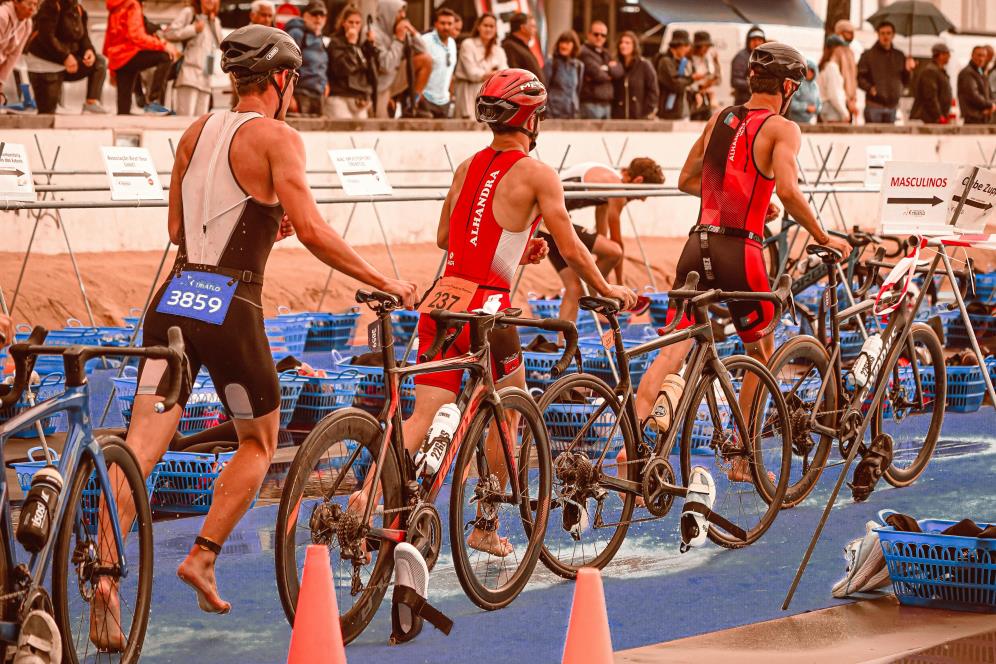
Most triathletes train the swim, bike, and run with honest effort, then give away time while standing beside a rack. A strong transition zone strategy keeps your race moving when your brain is wet, your hands shake, and everyone around you looks rushed. That matters in USA sprint and Olympic-distance races, where a sloppy change can cost more than a hard-earned bike split gain. The answer is not frantic speed. It is fewer choices, cleaner habits, and a race day setup that survives nerves. Readers who follow race-day performance coverage already know the small parts of competition often decide the final result. Triathlon works the same way. The athlete who leaves transition calm often rides better, runs better, and avoids penalties that turn a good day sour. For newer racers, this is also the rare skill that does not demand a bigger engine. You can improve it in a driveway, at a school track, or in a quiet corner of the gym parking lot.
The Transition Zone Strategy That Starts Before You Rack the Bike
Fast changeovers begin before the announcer calls athletes to the water. The best setup is not the prettiest towel or the most expensive gear. It is a short chain of actions that you can repeat while your heart rate is high. This is where many American age-group racers miss free time. They practice threshold intervals on Tuesday, then treat check-in like a garage sale on Saturday morning. The sharper approach is boring on purpose: know the space, trim the gear, and make every object earn its place. That sounds plain, but plain wins when two athletes reach the same rack row together and one of them starts searching. The rack is not neutral ground. It rewards the racer who made fewer choices before the horn ever sounded, and it exposes the racer who packed fear instead of a plan.
Walk the flow until it feels boring
Before you touch your gear, walk the path. Start where you will enter after the swim. Find your rack. Count rows, note landmarks, then walk to bike out. After that, walk bike in to your spot and run out. This takes five minutes at a local race in Ohio, Texas, Florida, or California. It can save far more when a crowd blocks your view.
The non-obvious move is to memorize the route from the athlete’s eye level, not from a calm standing pose beside your bike. After the swim, you may be bent over, pulling goggles off, and breathing hard. A tall sponsor flag helps. So does a trash can, a tree, or the end of a fence line. Your rack number alone can vanish in the mess.
Treat the walk-through like a rehearsal, not a tour. Say the turns out loud if you need to: water exit, third row, left at the orange cone, bike out by the timing arch. That language may feel childish in the moment. Later, with water in your ears and your pulse thumping, it can become the cleanest thought you have.
Good triathlon transitions feel dull in rehearsal. That is the point. You are trying to remove the need for clever thinking. If you have to solve the route on race morning, you waited too long.
Build a small setup that tells your hands what to do
A clean rack spot works like a sentence. Helmet first. Glasses inside or beside it. Shoes open. Race belt placed so you can grab it while moving. Nothing extra earns space unless it has a job. A huge towel, spare snacks, loose socks, extra bottles, and backup layers may feel safe, but clutter steals attention.
For a sprint race, one small towel under your front wheel area can be enough. Put bike shoes where your feet can find them. Put run shoes with tongues open and elastic laces ready. If you race with socks, roll each sock halfway so it slides over wet feet faster. That small detail beats tugging at a limp tube of fabric while the clock runs.
Think about wind too. Many U.S. races start near lakes, beaches, and open parking lots. A light hat can blow away. A race belt can slide under the bike. Sunglasses can get kicked if they sit too far from the rack. Place light items inside the helmet or inside a shoe so they stay in the plan, not under someone else’s wheel.
A smart race day setup also respects rules. USA Triathlon’s multisport rules cover key race conduct, including run numbers and prohibited items such as glass containers in transition. Read the athlete guide for your specific event too, because local rack rules can change the plan. Speed that earns a penalty is not speed. The fastest legal version of your routine is the only version worth training, no matter how loud the rack area feels.
T1 Is Not a Costume Change, It Is Damage Control
The swim-to-bike switch looks simple from outside the fence. Inside, it is messy. Your pulse is high. Your fingers may feel thick. Your wetsuit grabs your calves. Someone near you is yelling at a volunteer because they cannot find their bike. T1 rewards the athlete who accepts that chaos and keeps the routine plain. The goal is not to feel graceful. The goal is to leave with the bike, the required gear, and enough calm to ride the first mile well.
Strip decisions before you reach the rack
The best T1 starts before your rack spot. As you jog from swim exit, move with purpose but do not sprint like a panicked intern. Cap and goggles come off in your hand. Wetsuit comes down to the waist while you are moving if the event allows it. Eyes lift early so you can find your landmark.
Here is the trap: many athletes try to be faster by adding tricks. Flying mounts, shoes clipped to pedals, and rubber bands can work for trained racers. For a first sprint triathlon in the U.S., they can turn into a comedy show near the mount line. If you have not practiced the move until it feels plain, do not debut it in front of officials and fifty nervous riders.
A smart choice can look less flashy. Sitting for two seconds to pull a stubborn wetsuit over the ankle may beat hopping around on one foot for twelve. Running a few steps slower through a crowded lane may beat bumping handlebars and apologizing while your shoes sit untouched. There is no prize for the most dramatic exit.
A strong beginner triathlon training plan should include transition practice, not only swim yards and run miles. Ten minutes after a brick workout can teach your hands where to go. That lesson shows up on race day when your mind goes foggy.
Helmet discipline beats heroic rushing
There is one order that should never change: helmet on and fastened before the bike leaves the rack. Then bike out. Mount only after the mount line. After the ride, dismount before the line, rack the bike, then unclip the helmet. That order protects you from penalties and from the kind of crash that ruins the day for everyone around you.
The counterintuitive part is that calmer athletes often leave T1 sooner. They do not bend down twice. They do not forget sunglasses. They do not run back for a race belt they should have saved for T2. They move like someone following a recipe they have cooked a hundred times.
Watch a crowded transition at a summer sprint race and you will see the same pattern. The athlete who storms in first is not always the first one out. The athlete who knows the order often slides past without drama. Quiet speed is still speed.
If your hands shake, talk to yourself in short commands. Helmet. Shoes. Bike. Go. It sounds silly until it works. In T1 and T2, simple words can hold the whole race together.
T2 Is Where Good Bike Legs Can Betray You
Bike-to-run should be faster than T1, yet it punishes athletes who overcook the final miles. You enter with heavy legs, a dry mouth, and a brain that thinks the hard work is almost over. Then your shoes fight you, your rack is on the wrong side, and the first run steps feel like you borrowed someone else’s knees. T2 asks a different question than T1. It asks whether you can protect the run while finishing the ride.
Prepare the run before the bike ends
T2 begins in the last mile of the bike. Shift to a gear that lets your legs spin. Sit tall for a few breaths. Take the last planned sip before the dismount zone. You are not trying to win the bike leg in the final thirty seconds. You are trying to arrive ready to run.
This is where ego costs time. A rider who hammers into transition may gain five seconds before the line and lose forty while stumbling with shoes. A rider who softens the final stretch can dismount cleanly, rack the bike, and leave with better rhythm. The faster choice may look slower for a moment.
Your run gear should be almost boring. Shoes open. Hat or visor on top if you use one. Race belt ready unless your race requires the number earlier. Some athletes place a small towel beside run shoes to swipe grit from the soles of their feet. Others skip it because the towel creates one more task. Test both.
If the race uses separate bags, as some longer events do, the same logic applies. Pack the bag so the first item you need sits on top. Do not bury socks under a jacket you may not wear. Do not fold the race belt into a knot. The bag should open and answer the next question.
Make the first 200 yards part of the changeover
Do not judge your run by the first thirty steps. Nearly every triathlete feels strange leaving T2. The body shifts from circular force on the pedals to impact on the ground, and the first bit can feel clumsy. That does not mean your run is gone.
Use the first 200 yards as a moving reset. Stand tall. Shorten the stride. Let your arms swing rather than forcing speed. If you use a watch, resist staring at instant pace while GPS settles. Many athletes surge because the legs feel odd, then pay for it at mile two.
This is where spectators can trick you. Cowbells, family voices, and the run-out chute can make the first minute feel like a finish line. It is not. Smile if you want, but keep the body under control. A calm exit can protect the last mile better than any speech you give yourself later.
This is a clean place for your race-day nutrition checklist to connect with pacing. If you need gel on the run, decide before the race where it lives and when you take it. Do not turn T2 into a snack debate. A planned carry beats a last-second pocket search.
Practice Makes Transitions Feel Smaller Than the Race
You do not need a private training camp to improve this part of triathlon. You need repetition under mild stress. The goal is not to look like a pro on social media. The goal is to avoid the slow drift that happens when tired people make tiny choices with no system. Practice shrinks the task. It turns a noisy race space into a familiar room with a few simple jobs.
Rehearse the exact sequence, not a clean fantasy
Set up a mock rack in your driveway, hallway, garage, or at a quiet park. Use the same shoes, helmet, belt, and bottles you plan to race with. Run in from twenty yards away, change, jog out with the bike, circle back, rack it, and change again. Time it, but do not worship the time yet.
Mess it up on purpose. Wet your feet. Put your goggles in your hand. Start with your breathing high after a short run. Practice after a brick when you feel clumsy. That version teaches more than a neat rehearsal done fresh.
Add one constraint at a time. Practice with cold hands after an early-morning swim. Practice taking off a wetsuit when your calves feel tight. Practice clipping a helmet strap without looking down. Small stress makes the routine honest.
Good triathlon transitions are learned in the body. You should know which hand grabs the helmet and which hand lifts the bike. You should know whether your sunglasses go on before or after the helmet. When the order lives in muscle memory, race noise matters less.
Keep a post-race audit instead of blaming fitness
After the finish, write down what happened before memory smooths it over. Did you miss your rack? Did socks slow you down? Did you bring gear you never touched? Did you arrive at T2 too hard from the bike? This is not self-criticism. It is data you can use.
A simple audit might show that your fitness was fine and your time leak was procedural. That is good news. It is easier to fix a clumsy shoe setup than to gain another ten watts on the bike in one week.
Use the audit to change one thing, not six. Maybe you move sunglasses into the helmet. Maybe you choose elastic laces. Maybe you stop carrying a spare shirt for a thirty-minute run. One clean fix is easier to test than a whole new system.
Here is the non-obvious win: practice also lowers emotional load. When you trust your setup, you stop fearing transition. You leave the water with a job, not a worry. That shift changes the whole mood of race day setup, especially for newer athletes who already have enough to manage.
Conclusion
The transition area looks small on the map, but it carries more pressure than its square footage suggests. It is where fitness meets order, and order often wins. You do not need fancy gear or circus skills to improve. You need a setup that makes sense, a route you have walked, and a sequence you can repeat when your hands feel slow. The best transition zone strategy is not about rushing through panic. It is about making panic unnecessary. For American age-group racers chasing a first finish, a podium, or a personal best, that is a rare bargain: free time without harder training. Treat T1 and T2 like part of the race, because the clock already does. Show up early, keep the area lean, follow the rules, and practice until the change feels smaller than the moment. Seconds are waiting there. Go take them. Then give the same respect to the next race, because the skill compounds. A cleaner setup becomes a calmer start, and a calmer start lets your fitness show up without needless noise.
Frequently Asked Questions
How much time can better triathlon transitions save?
A beginner can often save 30 seconds to two minutes by cutting clutter, finding the rack faster, and following a set order. Competitive athletes may chase smaller gains, but those seconds still matter in sprint and Olympic-distance races where finishing places can be tight.
What is the best way to set up a triathlon transition area?
Place gear in the order you will use it. Keep the setup small: helmet, shoes, glasses, race belt, and needed nutrition. Avoid loose extras. Walk every entry and exit before the race so your setup connects to the actual course flow.
Should beginners practice flying mounts in triathlon?
Most beginners should skip flying mounts until they have practiced them many times in a safe setting. A normal mount done cleanly is often faster than a risky skill done poorly. Safety, control, and rule awareness matter more than looking advanced.
Are socks worth wearing during a sprint triathlon?
Socks can be worth it if you blister easily or dislike running barefoot in shoes. They cost time in transition, though. Practice both methods before race day. If you wear socks, roll them halfway so they slide onto wet feet faster.
What are the biggest T1 mistakes new triathletes make?
Common mistakes include forgetting the rack location, touching the bike before fastening the helmet, bringing too much gear, and rushing without a set order. Many athletes also lose time fighting wetsuits because they never practiced removing one while tired.
Why does running feel strange after T2?
Your legs are switching from pedaling to ground impact, so the first steps can feel awkward. Short strides, tall posture, and calm breathing help the body settle. Avoid sprinting out of transition unless you know you can hold the pace.
How early should I arrive to set up transition?
Arrive early enough to park, check in, rack your bike, place gear, use the restroom, and walk the full transition flow. For many local races, that means reaching the venue at least 60 to 90 minutes before your wave starts.
Can transition mistakes lead to penalties?
Yes. Rule issues such as helmet order, mount and dismount lines, race number placement, or prohibited items can lead to penalties or disqualification. Read the event guide and the governing body’s rules before race morning so speed never turns into a costly mistake.