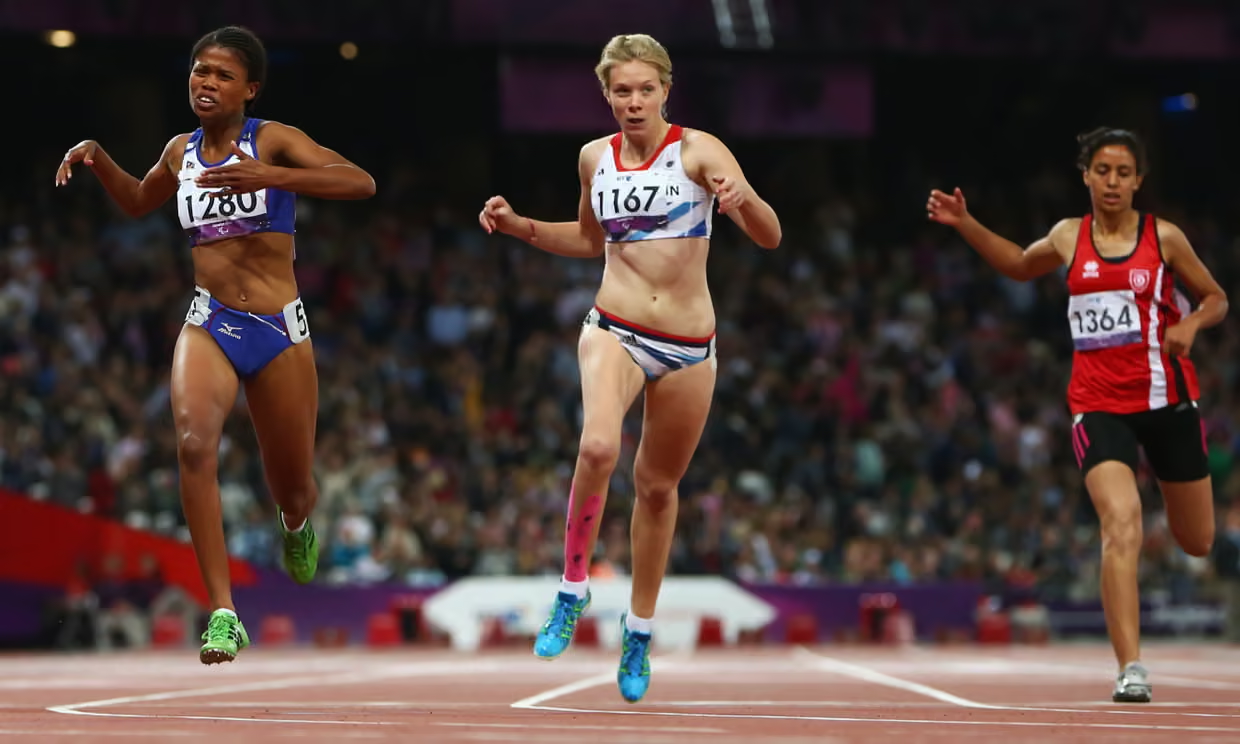
A medal race can turn on a thousand tiny things: a clean start, a steady chair stroke, a missed turn, a late surge. Paralympic athlete classification sits behind all of that, because it decides who shares the start line before talent can speak. The aim is fair competition, not sympathy, and that point gets lost when U.S. viewers meet the letter-number codes only during a broadcast. The process sorts athletes by how an impairment affects sport tasks, not by the name of a diagnosis, and the IPC says athletes may go through documentation, evaluation, and later review as bodies or rules change. For fans following LA 2028, college adaptive programs, or a rising American sprinter, this is not a side issue. It can shape heats, finals, funding, sponsorship, and public trust. That is why thoughtful sports media coverage has to explain the hard parts, not only the medal ceremony. The fairest class can still feel unfair to someone standing one lane away from gold.
Why Paralympic athlete classification decides more than lanes
Classification is meant to keep medals from going to the least impaired athlete by default. That sounds simple until you watch two athletes with the same sport class move in ways that look nothing alike. One may have a limb difference. Another may have reduced muscle power. A third may have a coordination impairment that changes only under speed or fatigue. The class label tries to gather similar sport effects, but it cannot make bodies identical. That gap is where confusion begins.
The line between fair grouping and hidden advantage
The official structure starts with eligibility. Each sport decides which eligible impairments fit its event, then sets the minimum impairment criteria and sport classes inside that framework. The IPC notes that classifiers are trained and certified by the international federation for the sport, with different kinds of experts used for physical, vision, and intellectual impairment groups. This matters because wheelchair racing, swimming, table tennis, and shooting do not test the same body demands.
The official IPC classification guidance makes that sport-by-sport logic clear: eligibility in one Para sport does not mean eligibility in another, because every event asks different things from the body. A U.S. fan watching Para swimming may see two S9 athletes and assume the match is simple. It is not.
The non-obvious part is that a class can be fair in design and still produce an uneven final. Classification does not remove all natural advantage. It removes one unfair source of advantage as well as the rules can measure it. A taller swimmer, a sharper tactician, or a racer with better coaching can still win. That is sport. The dispute starts when the advantage looks tied to impairment rather than training.
Why one class change can rewrite a podium
A single class change can move an athlete from favorite to fringe finalist. That is why Paralympic classification rules feel personal. In Olympic sport, a runner who changes event usually chooses it. In Para sport, an athlete can be told their category changed after an evaluation, a protest, or a rule update. The IPC says some athletes may need more than one evaluation across a career, including those with progressive or fluctuating conditions or when a federation changes its rules.
Think about an American teenager from a regional adaptive track meet who reaches international level. At home, they race a national class and build times around that field. Then an international panel reviews them under a global rulebook. The athlete may be placed higher, lower, or found ineligible for that event. No scandal has to exist. The ladder itself changed.
Medal outcomes shift because competition is built around margins. In the 100 meters, a class move can change the athletes you face, the qualifying standard you chase, and the sponsorship story around your season. The public often learns about the change only when a favorite misses the podium. By then, the emotion has arrived before the explanation.
Where sport class controversies begin for athletes and viewers
The loudest arguments usually start at the border between two classes. The athlete near the edge is not easy to place, and the athlete who loses to them may feel the difference every time results are posted. Sport class controversies are not always about cheating. Many are about uncertainty, timing, and the poor fit between a short evaluation and the messy way a body performs under pressure.
Medical proof cannot capture race-day function
Medical files can show diagnosis, surgery, scans, or long-term impairment. They cannot fully show how a racing chair feels at 90 meters, how a prosthetic socket behaves in heat, or how spasticity changes after travel. That is why evaluations often combine paperwork with physical or technical assessment, and sometimes observation in competition. The IPC describes classification as a process that can include physical and technical testing followed by competition observation before a final sport class is set.
This is where fans get impatient. They want one clean answer: “Is this athlete in the right class or not?” A trained classifier may be asking a narrower question: “Does this athlete’s impairment limit the key tasks of this sport enough to fit this class under this rule?” Those are not the same question.
A strong example comes from sports that use equipment. In wheelchair racing, chair setup, glove choice, trunk control, and pushing style all blend together. An athlete with less function but better chair fit can look smoother than an athlete with more raw function and weaker setup. That visual can fool spectators. It can also fool rival camps if they judge from a finish line clip.
Why trust cracks fastest at the class border
Trust breaks when athletes believe the same rule is being read in two ways. One country may have deep medical support and know how to prepare an athlete for evaluation. Another may send a young competitor with thin paperwork and little guidance. Both may follow the rules. One walks in better prepared.
This is not a small issue for U.S. sport. American athletes often pass through school teams, college training, private clubs, military programs, and the U.S. Paralympic pipeline. A para swimmer from California may know the process years before an international meet. A newcomer from a smaller program may meet it late, nervous, and under-informed. Preparation should not decide a class, but it can affect how clearly an athlete presents their history and function.
The counterintuitive fix is not less classification. It is more plain-language education before the high-stakes moment. Athletes, parents, and coaches need to know what records matter, what equipment must be declared, what a protest can and cannot do, and why a class is tied to sport tasks. A good adaptive sports training guide should treat classification literacy like starts, turns, strength work, and recovery.
The cheating problem is harder than most fans think
Intentional misrepresentation is the phrase nobody in Para sport likes to say, but nobody serious can ignore it. The 2025 IPC standard treats it as a threat to fair and meaningful competition and gives federations procedures to investigate and prosecute allegations. The hard part is proof. A bad test does not prove deceit. A great race does not prove an athlete lied. That gray zone is why the issue can damage trust even when no finding is made.
What intentional misrepresentation looks like
The IPC’s 2025 standard gives examples that include forged medical documents, deliberate underperformance during evaluation, tiring oneself before a session, failing to disclose adaptive equipment, and withholding relevant medical or classification information. Those examples sound dramatic, yet some can look ordinary from the outside. An athlete has a poor morning. A document is missing. A movement test seems weaker than race-day form. Suspicion grows fast.
For medal outcomes, the incentive is clear. A lower class can mean racing athletes with greater sport limitation. If an athlete gains that place through deceit, the harm is not abstract. Someone else may lose a final, a medal bonus, a national team slot, a college opportunity, or public belief in their career.
Still, the fair response cannot be rumor. Para athletes already answer invasive questions that many non-disabled athletes never face. Calling someone a cheat without evidence can turn a sport rule into public humiliation. That is why reporting channels, evidence standards, and fair hearings matter as much as the class decision itself.
Why honest athletes can still look suspicious
The most uncomfortable truth is that honest athletes can look inconsistent. Some impairments fluctuate. Pain changes. Fatigue changes. Medication timing changes. A swimmer may look limited on land but more fluid in water. A wheelchair racer may look stable in a chair and unstable while standing. A viewer who sees only the medal race may mistake adaptation for dishonesty.
This is one reason Paralympic classification rules have to protect both sides at once. They must catch deceit without punishing athletes for having bodies that vary. They must allow protest without turning every podium into a courtroom. They must keep records private while giving other athletes enough trust that the result is not theater.
ABC reporting in 2023 captured calls from officials for more transparency, stronger whistleblower pathways, better intelligence sharing, and even an independent body to handle intentional misrepresentation concerns. The same report said the IPC’s code review was addressing issues raised by athletes and member groups. The point is not that every claim is true. The point is that the movement has outgrown quiet hallway confidence. It needs systems people can understand before anger fills the gap.
How U.S. athletes, fans, and LA 2028 can demand better
LA 2028 will bring Para sport closer to American mainstream attention than any normal season can. That is a gift and a risk. More viewers means more respect, more sponsorship, and more kids seeing a path. It also means more casual suspicion when a classification story breaks. Sport class controversies will not vanish by 2028, but the U.S. can help set a better public standard for how they are handled.
Better education should start before the international stage
The U.S. pathway needs class education early. Not a hidden PDF handed to families after a qualifying time. Real guidance. Clubs should explain how domestic and international classification may differ. Coaches should teach athletes what to bring, what to declare, and what rights they have if they disagree. Parents should learn that a lower class is not a prize and a higher class is not an insult.
The official U.S. Paralympic track and field page says classification groups eligible athletes according to activity limitation in a given sport and works within a wider IPC code structure. That idea needs to be repeated in youth meets, college clinics, military adaptive sport events, and broadcast graphics. When people understand the principle early, they are less likely to treat every surprise result as proof of cheating.
A useful U.S. example is the growth of adaptive sport around universities and rehab centers. A young wheelchair racer may have a strength coach, a chair technician, and a local mentor before ever seeing an international panel. That support can be a huge advantage, but it should also come with ethics training. The best athletes should know how to win and how to protect the field they win in.
Transparency matters, but privacy still matters too
Fans often ask for open explanations after a disputed result. They want to know why one athlete is T38 instead of T37, or why a swimmer stayed in S9. More transparency helps, but full medical exposure is not the answer. Disabled athletes should not have to publish intimate health records to prove they belong.
The better path is layered transparency. Federations can explain class criteria in plain English. They can publish protest rules, timelines, and the kinds of evidence considered. They can release anonymized case patterns. They can train broadcasters to explain what a class means without turning athletes into medical exhibits. That gives the public a fair view while keeping private facts private.
This is where sports fairness and governance analysis can help readers separate three different questions: Was the rule sound? Was the process followed? Was the athlete honest? Those questions often get thrown into one angry pile. Keeping them separate is how Para sport protects medals without turning suspicion into a hobby.
Conclusion
The fairest Para sport future will not come from pretending classification is simple. It will come from admitting that it is difficult, human, technical, and tied to real careers. Fans want clean medal outcomes, but clean results require more than a finish photo. They require educated athletes, skilled panels, better communication, protected whistleblowers, and a public willing to learn before it judges. Paralympic athlete classification should be treated as part of the sport, not a footnote under the broadcast graphic. The next step for the U.S. is to make class literacy normal before LA 2028 turns every disputed call into national conversation. Watch the race, respect the athlete, and ask sharper questions about the rules that shape the podium.
Frequently Asked Questions
How does classification affect Paralympic medals?
It decides which athletes compete against each other, so it can shape finals before the race starts. A class change may move an athlete into a tougher or easier field. That can affect medals, funding, records, and public attention.
Why do Paralympic athletes have letters and numbers beside their events?
The letters usually point to the sport or event type, while the numbers show the sport class. The code helps group athletes by how their impairment affects sport skills, not by diagnosis alone.
Can a Paralympic athlete be reclassified during a career?
Yes. Reclassification can happen when an athlete’s condition changes, when they have a review status, or when a sport updates its rules. Young athletes and athletes with changing conditions may face this more than once.
What is intentional misrepresentation in Para sport?
It means an athlete or support person tries to mislead classifiers about impairment, ability, equipment, documents, or relevant history. It is treated as a disciplinary matter because it can create unfair advantage.
Are classification disputes always about cheating?
No. Many disputes come from edge cases, unclear communication, rule changes, or honest disagreement. Cheating exists as a concern, but not every surprising result or class decision means an athlete acted dishonestly.
Why can two athletes in the same class look so different?
A sport class groups similar sport impact, not identical bodies. Different diagnoses can create similar limits in the event. Training, technique, equipment, height, fatigue, and coaching can also change how an athlete looks in competition.
What can U.S. fans do to understand Para sport better?
Learn the basic class codes before major meets, listen to athlete explanations, and avoid judging from short clips. The best viewing starts with skill first, then asks how the class rules shape the race.
What should change before the LA 2028 Paralympics?
Athletes need earlier education, federations need clearer public explanations, and broadcasters need better graphics and language. Stronger reporting systems for suspected misconduct would also help protect clean athletes and public trust.