
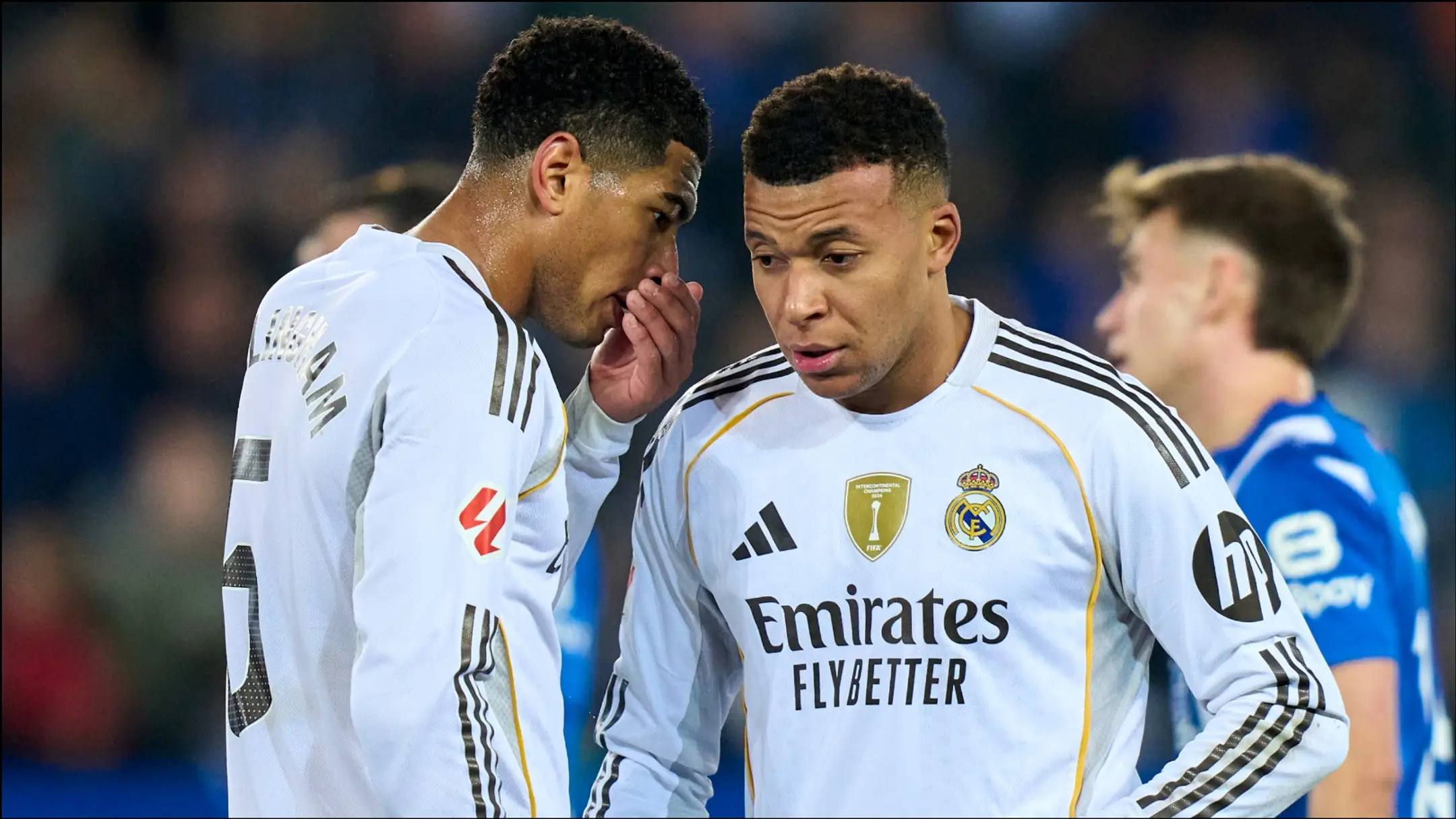
Few transfers are judged before the player has even touched the ball, but this one arrived with a verdict already waiting. The phrase Mbappe Real Madrid was treated like a finished story, not a new chapter, especially by fans in the United States who had watched the saga through Champions League nights, summer tours, and nonstop transfer debate. The fair answer is plain: Mbappé delivered the goals of a superstar, yet his first year did not solve every tactical and emotional question around Madrid’s attack. He scored on his official debut in the 2024 UEFA Super Cup, then finished the Real Madrid debut season with 44 goals in all competitions, including 31 in La Liga. For readers following European soccer through global sports coverage, that contrast matters more than the headline count. The season was not a failure. It was a reminder that even a world-class scorer can raise expectations faster than a team can absorb him.
Why Mbappe Real Madrid Expectations Were Almost Unfair
The summer story made the football feel smaller than the myth. Madrid had already won the Champions League before he arrived, so the public did not ask whether he could help. It asked whether he could make a champion look unfair. That is a harsher test than scoring goals, because it measures mood, control, fear, and the size of the gap between Madrid and everyone else. It also removes the normal grace period that most new signings get. A player can move cities, change leagues, learn fresh patterns, and still be treated as if he has arrived inside a video game.
The transfer carried more than one player could control
By the time Mbappé walked into Madrid, people were not judging a signing. They were judging years of waiting. The move had been teased, delayed, debated, and turned into a cultural event. In the U.S., where many fans follow clubs through streaming windows and social feeds, the story felt larger than a normal roster move. It was a deadline-day drama stretched across several summers.
That created a strange trap. If he scored, people shrugged and said that was expected. If he had a quiet half, the same people asked whether Madrid had broken its balance. No player wins that argument every week. The standard moved with him, which meant he could meet one demand and still be accused of missing another.
The non-obvious part is that the pressure did not come from weakness. It came from Madrid’s strength. Joining a team in crisis gives a superstar an easy story: rescue the club. Joining a champion gives him a colder job: improve something that already worked. That is harder to see and harder to praise.
The first goal gave the story too clean a start
His debut against Atalanta gave everyone the image they wanted. Madrid won 2-0, Federico Valverde scored first, and Mbappé added the second after a Jude Bellingham pass. The UEFA match report framed it as a record sixth Super Cup for Madrid, which made the night feel almost scripted.
That start helped him, but it also hurt him. A debut goal lets fans skip the normal adaptation phase. Nobody wants to hear about spacing, timing, or role fit after a new striker scores in a final. The first clip became proof before the project had any bruises.
A quieter start might have bought him patience. Instead, that goal poured gasoline on the fantasy. Fans expected the same clean finish every weekend, against deeper blocks, in slower league games, after travel, and with defenders already shading toward his runs. Football rarely stays that tidy. The league schedule, especially in Spain, has a way of turning glamour into small choices: near-post run or cutback, press or save energy, shoot early or wait for the extra pass.
The Numbers Looked Elite, but the Team Still Felt Uneasy
This is where the season becomes hard to grade. A normal forward would dream of those numbers. Madrid fans, though, do not grade normal forwards in normal ways. They compare every new star with ghosts: Cristiano Ronaldo, Karim Benzema, Ronaldo Nazário, and the idea of the Bernabéu number nine who decides every hard night. That culture creates a useful tension. It keeps standards high, but it can flatten the difference between strong performance and complete command. The scoreboard may say a striker did his job, while the crowd still feels the team did not own the match the way Madrid is supposed to own it.
Kylian Mbappé stats show the scorer arrived on schedule
The raw production was not the issue. Real Madrid later marked his Golden Boot by pointing to 31 La Liga goals in 34 matches and 44 goals in all competitions during his first season as a Madridista. Those are not settling-in numbers. Those are top-of-Europe numbers. They also show that the core skill traveled: the first step, the calm finish, the hunger to attack the six-yard box after a loose touch.
The better question is why such a season still felt incomplete to many supporters. Part of it was trophy math. Reuters later noted that he scored 44 times in 2024/25 but did not lift a major trophy, which sharpened the argument around his first campaign. Goals alone could not silence the feeling that Madrid had lost some grip in the biggest domestic and European moments. The Bernabéu does not separate the scorer from the season’s ending as cleanly as a stat page does.
That is why Kylian Mbappé stats need context. They tell you he finished chances, carried scoring runs, and gave Madrid a weekly threat. They do not tell you whether the whole attack breathed better. A score sheet can love a striker while the team shape still feels tight in the chest. That gap between individual output and collective ease defined much of the Real Madrid debut season.
Madrid attacking balance became the hidden issue
Madrid attacking balance was the part casual viewers could miss. On a highlight show, you saw the burst, the penalty, the curved run, the shot across goal. In full matches, you saw the negotiation. Vinícius Júnior wanted the left channel. Bellingham needed pockets between midfield and the box. Rodrygo needed rhythm, not scraps. Mbappé needed lanes to sprint into and enough central service to stay dangerous.
That is a lot of talent asking for the same valuable space. It does not mean the players are selfish. It means their best habits overlap. At Paris, Mbappé often had room to become the main accelerant. At Madrid, he had to share the ignition with players who already knew the road.
The counterintuitive insight is that more speed can make an attack slower if players begin waiting for each other to move. Some Madrid possessions had that feel. Nobody lacked quality. The issue was timing. When a team has several stars who can solve a play alone, the first pass can become cautious because every player is trying not to step on the next one’s moment.
For American fans used to NBA-style star pairings, it is like adding another 30-point scorer to a team that already has two shot creators. The box score may look strong, but the spacing decides whether the group scares opponents for 90 minutes. That is why Real Madrid squad analysis matters more than a simple goals column. Madrid attacking balance was never a side note; it was the season’s quiet argument.
How the Role Shift Tested His Patience
Mbappé did not arrive as a blank player. He came with habits built through Monaco, Paris, and France. He has long been at his most frightening when he can start wide, face the defender, and attack open grass. Madrid often needed him to live closer to the center-backs, where the game is more crowded and less romantic. That asked for a different kind of ego. Not smaller. More patient. He had to accept that some of his best work would not end with his own shot, and that is a hard bargain for a player whose career has been built on direct damage.
Why center-forward work slowed the easy moments
Playing through the middle sounds glamorous until you watch the job up close. A center-forward gets bumped before the pass comes. He starts runs that never receive the ball. He pins defenders so others can attack space. He spends long stretches with his back to goal, feeling contact instead of seeing grass.
For Mbappé, that meant trading some runway for penalty-box duty. He could still drift left, but Madrid could not let every attack bend toward his favorite zone. Vinícius already owned much of that lane, and the team still needed width to stretch low blocks. The striker role also asked him to make ugly runs that created room for someone else. Those runs rarely make the broadcast package, but they decide whether a teammate receives the ball under pressure or with one extra yard to breathe.
That role shift explains why some games looked odd even when he scored. He was learning when to be the arrow and when to be the wall. Fans love the arrow. Coaches notice the wall. The Bernabéu expects both. In the Real Madrid debut season, that learning curve was hidden under a pile of goals, which made it easy to miss.
Why Vinícius and Bellingham changed the rhythm around him
The best Madrid attacks had a shared pulse. Vinícius would pull defenders toward the touchline, Bellingham would arrive late, and Mbappé would threaten the gap before the center-back could turn. When that timing clicked, the attack looked cruel. One bad step from a defender became a shot.
When it did not click, the front line looked like a luxury car stuck in traffic. You could see the engine. You could hear the crowd waiting for the burst. Then a defender would step across, the pass would arrive half a beat late, and the move would die without anyone doing anything obviously wrong.
Bellingham’s presence made the puzzle more interesting. He is not a plain midfielder who stays behind the forwards. He attacks the box with striker instincts, which can help Mbappé by dragging markers away. It can also shrink the same central space Mbappé wants to attack. That is not a flaw. It is a design problem that needed reps, trust, and sharper choices.
The season asked him to be patient in a place that rewards impatience. Madrid wants goals now, titles now, chemistry now. Yet the players around him were not background pieces. They were stars with their own zones, pride, and rhythm. A great team is not built by putting famous names in a straight line. It is built by teaching them when to disappear for two seconds.
What American Fans Should Learn From the Hype Cycle
The U.S. audience often meets European soccer through moments: a Champions League clip, a Clásico goal, a transfer reveal, a summer friendly in a packed American stadium. That can make a season feel like a playlist. Mbappé’s first Madrid year is a useful correction. The truth sat in the weekly grind, not only in the viral frames. If you watched only the goals, you saw a superstar. If you watched the full matches, you saw a team trying to learn what kind of superstar it had become. That distinction is useful for newer fans, because soccer form is not a straight line from talent to wins. It is a weekly test of habits.
The highlight reel missed the weekly grind
A goal montage makes adaptation look easy. You see the finish, not the 20 minutes where he was ignored on two runs. You see the celebration, not the defensive shift that left Madrid open on the other side. You see the star, not the team trying to decide how much of itself to change for him.
This matters because soccer punishes imbalance slowly. One missed rotation in September may not feel dramatic. By April, the same flaw can decide a tie. Madrid’s season had that kind of tension. The talent was obvious. The control was not always there. For fans waking up early on the East Coast or catching replays after work on the West Coast, the difference was easy to miss unless you watched the dull spells too.
The non-obvious lesson is that dominance is quieter than highlights. A team can score three times and still look easier to play through than it should. A striker can win the scoring race and still leave fans wondering why the attack did not feel automatic. Both things can be true. The best teams do not only create big moments; they make opponents feel trapped between them. Madrid had nights like that, but not enough to make the debate disappear.
The fair grade sits between praise and disappointment
A fair grade should not pretend the season was flawless. It should not pretend it was poor either. Mbappé scored at a level most forwards never touch, won the European Golden Boot for his league output, and gave Madrid a player opponents had to plan around every week.
The disappointment came from the size of the promise. Fans were not promised a great scorer. They thought they were getting the final piece of a team that might crush Spain and Europe at once. When that did not happen, the emotional grade dropped below the statistical grade. That reaction says as much about Madrid culture as it says about the player.
That is the honest split. As a scorer, he passed. As a symbol of instant Madrid perfection, nobody could pass, because the test was built wrong. For fans tracking European soccer transfer pressure, his season should be the case study: the most expensive expectation is not money. It is the belief that one player can remove friction from an entire club.
Conclusion
Mbappé’s first year in Spain should be remembered with a steady eye, not a hot take. The goals were real, the pressure was real, and the uneven team feeling was real too. The fairest read on Mbappe Real Madrid is that the player delivered star production while the club still had to solve the human parts of a crowded attack. He did not need excuses. He needed a better frame. A 44-goal season should not be treated like disappointment because it lacked fantasy-level ease, but Madrid is not a normal workplace for forwards. The shirt asks for numbers, titles, fear, and control all at once. That is why the next step matters more than the first impression. If the chemistry sharpens and the biggest trophies follow, this debut year will look like the foundation, not the verdict. Judge the season by what it revealed, then watch what Madrid builds from it. The lesson is not that hype was wrong. The lesson is that even the right signing has to be turned into a team.
Frequently Asked Questions
How did Kylian Mbappé perform in his first Madrid season?
He performed like an elite scorer, not like a failed signing. The tension came from Madrid’s team results and attack balance, not from his finishing. His league and overall goal totals showed that his scoring translated fast, even while the fit around him needed time.
Why did some fans still criticize Mbappé after so many goals?
Madrid fans often judge stars by trophies, control, and Clásico-level impact, not goals alone. When the team looked uneven or missed the biggest prizes, some criticism landed on the most visible player. That does not make the criticism fully fair.
Was the Real Madrid debut season a success for him?
Yes, from an individual scoring view. From a team-history view, it felt unfinished. That split is the whole story. A striker can produce at a world-class level while the club still falls short of the season fans imagined.
Did Mbappé fit naturally with Vinícius Júnior?
The fit had huge upside but needed adjustment. Both players like to threaten from the left, attack space, and force defenders backward. When their timing worked, Madrid looked dangerous. When it did not, the attack sometimes felt crowded.
What role did Jude Bellingham play in Mbappé’s adaptation?
Bellingham helped by connecting midfield to attack and arriving late in the box. He also made the central spaces busier. That gave Madrid more ways to score, but it demanded sharper timing between three stars who all wanted decisive touches.
Why did American soccer fans follow this season so closely?
Mbappé is one of the few global soccer players who reaches beyond club fandom in the U.S. Real Madrid also tours America, plays at friendly kickoff times during summer, and attracts casual viewers. The transfer became a mainstream soccer story.
What do Kylian Mbappé stats miss about the season?
They miss spacing, chemistry, defensive balance, and the pressure created by Madrid’s standards. Stats can show who scored and how often. They cannot fully show whether a front line felt natural, whether roles were clear, or whether opponents sensed doubt.
What should Real Madrid improve around Mbappé next?
Madrid should keep refining movement between the left wing, center-forward lane, and Bellingham’s late runs. The goal is not to make every attack go through one player. The goal is to make defenders unsure which star will hurt them next.