
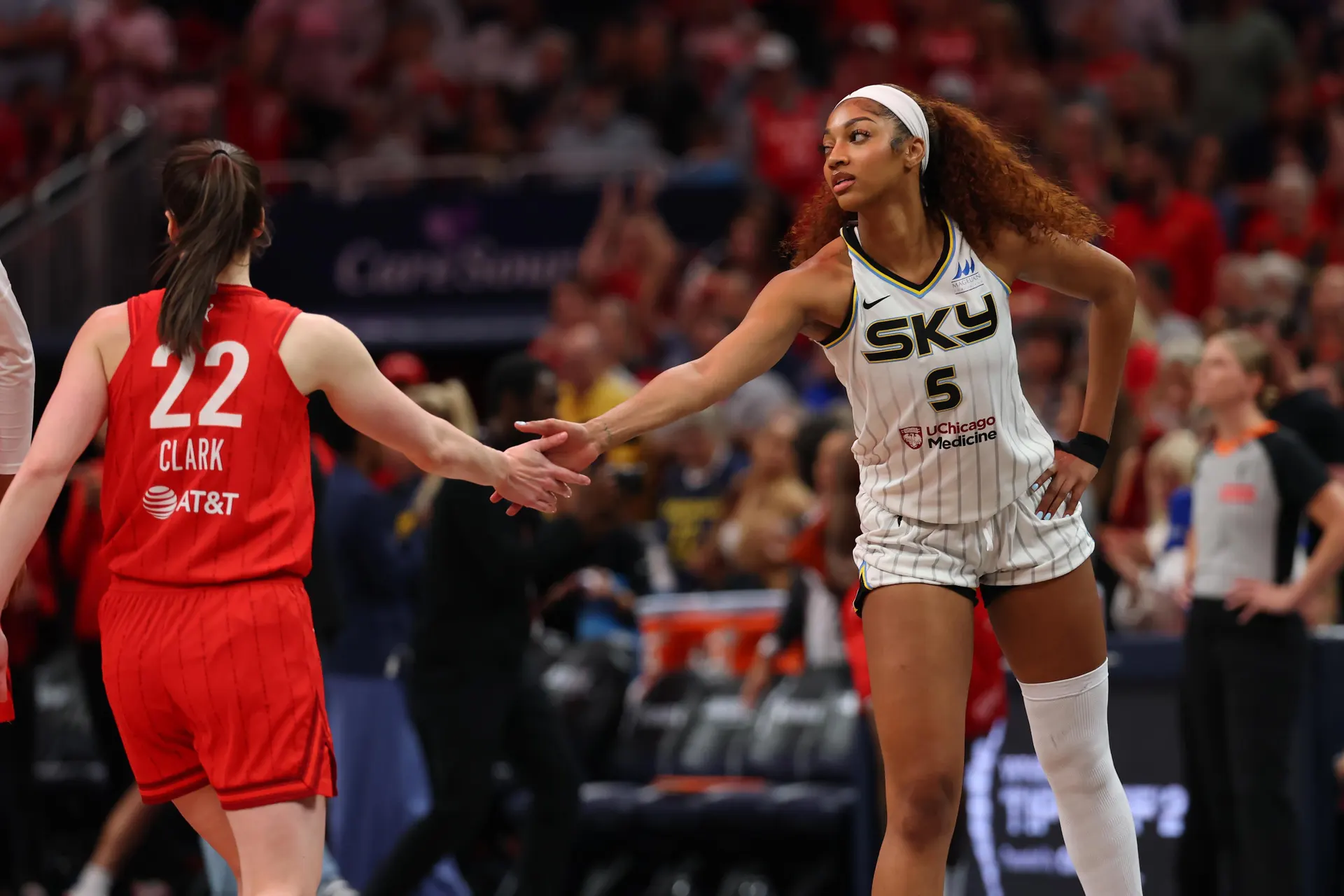
A league can spend years asking casual fans to care, then one season arrives and the public acts as if the door had been open all along. The Caitlin Clark WNBA story did not create women’s basketball from scratch, and that matters. It pulled a larger American audience toward a product that already had stars, rivalries, skill, and tension. You could see it in packed Fever road games, louder national broadcasts, sold-out arenas, and business coverage that treated the WNBA as a real sports-market story, not a side note for summer. For readers tracking sports business coverage, the core answer is plain: Clark raised demand at the gate, helped lift WNBA viewership, and gave league revenue talks a sharper public proof point. The league’s 2024 report said the regular season was its most watched in 24 years, with its highest total attendance in 22 years, while AP later reported that new media money would start in 2026 through an 11-year deal worth about $2.2 billion.
How Caitlin Clark WNBA Demand Changed the Live Gate
Ticket demand is the cleanest place to see the Clark effect because fans vote with time, travel, and money before the game starts. Television can be shaped by channel placement. Social buzz can be noisy. But a moved game in Washington or Chicago tells you something blunt: arenas expected more bodies when Indiana came to town.
Why WNBA ticket sales moved before tipoff
The first sign was not a playoff run. It was calendar math. Teams saw Indiana on the schedule and acted early, because Clark brought a fan base that had followed her from Iowa into the pros. Some were die-hard basketball people. Some were parents bringing daughters. Some were local sports fans who wanted to say they saw the moment live.
That mix changed WNBA ticket sales in a way the league had not seen at this speed. The official WNBA season report said 2024 total attendance reached 2,353,735, up 48% from the season before, with 154 sellouts. The Fever’s home attendance hit 340,715, a single-season record for one WNBA team, and Indiana led the league with a 319% year-over-year attendance rise.
The arena effect also changed the feel of the product. A loud crowd makes every run look bigger on television. It helps the home team market future games. It gives sponsors better images for local campaigns. Empty seats can make a good sport look small. Full sections do the opposite.
The non-obvious part is that this was not only a home-market story. A normal rookie draws fans in her own building. Clark changed the road gate, too. When teams moved Fever games into bigger arenas, they were not doing charity for Indiana. They were taking an available date and making it larger.
The road-game test that exposed the market
The best business test came when Clark was unavailable. In 2025, Reuters reported that ticket prices fell after news of her quad injury. The get-in price for Indiana at Chicago dropped 71%, and tickets for a Fever game against Washington fell 47% after the injury announcement. Both games had been moved to larger venues in expectation of Clark’s draw.
That pricing swing also showed how buyers were valuing scarcity. A Fever visit could be the only chance for a family in Baltimore, Chicago, Atlanta, or Los Angeles to watch Clark that summer. Once the star attraction was uncertain, the seat was no longer the same product. It was still a pro basketball ticket, but it had lost the event premium.
That detail matters because it separates team loyalty from star demand. Plenty of fans still wanted to watch the Fever, Angel Reese, the Sky, the Mystics, and the league. Yet the pricing shock showed how much of the premium came from one player’s presence. You did not need a consultant deck to see it. The secondary market had already done the math.
This is where the league faces a useful problem. WNBA ticket sales got a new ceiling, but the floor still has to rise without depending on one name. The smartest teams will treat Clark games as a customer-acquisition event. A first-time buyer comes for her logo threes and outlet passes. The franchise has two hours to sell the wider league.
That is harder than it sounds. The arena experience must make a new fan notice the pace, the rivalries, the music, the local star, and the next home date. The ticket spike is not the win by itself. The win is turning a Clark night into a second purchase when Indiana is not in town.
Why National TV Became the Real Power Signal
The gate showed local demand. Television showed national habit. Once Clark entered the league, the WNBA stopped looking like a niche product that needed perfect scheduling to find a crowd. It started producing numbers that forced networks, sponsors, and casual sports talk shows to pay attention.
WNBA viewership became appointment sports
The 2024 season gave networks a clean story to sell. The WNBA reported more than 54 million unique viewers across ABC, CBS, ESPN, ESPN2, ION, and NBA TV. ESPN platforms averaged 1.19 million viewers, up 170% from the previous season, while CBS averaged 1.10 million and had its five most-watched WNBA games ever.
Those numbers did not happen because every viewer suddenly became a tactics expert. Many came for the same reason people watched early Tiger Woods, Serena Williams, or Steph Curry. They sensed that something could happen from anywhere on the floor. Clark’s range makes a possession feel alive before the offense is set.
That is gold for television. A viewer can enter late and still understand the tension. Is she crossing half court? Is the defender high enough? Will the pass split two people? The broadcast does not need to explain every off-ball cut before the audience feels the threat.
It also helps that her game fits the clip economy without being empty. A deep three travels fast on social media, but the pass before it, the screen angle, and the defensive panic give analysts something to explain the next day. That mix serves both casual viewers and serious fans.
The absence effect proved the audience was real
The sharper test came when Clark missed time. Reuters reported that her June 2025 return against the New York Liberty drew an average of 2.2 million viewers on ABC and peaked at 2.8 million. The same report said WNBA viewership across ESPN platforms was up 15% from 2024 at that point in 2025.
A strange thing happened during her injury window: some games without her still performed well. That is not an argument against her draw. It is a sign that some new fans had begun to stay. Front Office Sports noted that certain Fever games without Clark still landed among strong network results, even as other comparisons showed dips from Clark-led telecasts.
That is the healthiest version of the Clark effect. One player opens the door. The league has to keep people from leaving. A’ja Wilson, Breanna Stewart, Napheesa Collier, Sabrina Ionescu, Kelsey Mitchell, and other stars give the broadcast real depth once a viewer learns the names.
Networks care about that second layer because schedules cannot survive on one matchup. A season package needs weeknight inventory, playoff stakes, studio debate, and enough familiar faces to keep a viewer from asking, “Why am I watching this one?” Clark supplies the loudest entry point. The league has to supply the answer after that.
The counterintuitive lesson is that Clark’s biggest value may not be her highest-rated game. It may be the second or third game a new viewer watches when she is not playing. That is when curiosity becomes habit, and habit is what networks buy.
For publishers building sports content, this is also why women’s basketball audience growth deserves its own coverage lane. It is not a single-player celebrity beat. It is a live sports market learning how to keep a new audience after the first surge.
How League Revenue Followed the Proof of Demand
The business side did not wait for every skeptic to agree. Once attendance, ratings, merchandise, and social traffic moved in the same direction, the WNBA had stronger proof in every money conversation. That does not mean Clark alone wrote the checks. It means she helped make the upside harder to ignore.
Media money follows proof, not hype
AP reported in July 2024 that the WNBA announced an 11-year media rights deal with Disney, Amazon Prime, and NBC, with more than 100 regular-season games to be broadcast each season. AP also reported, citing a person familiar with the deal, that the league would receive about $200 million per year.
That is where league revenue moves from buzz into structure. A sold-out building is good. A big TV rating is better. A long media contract changes planning, salaries, expansion math, franchise value, and sponsor behavior. It gives owners and players a new fight over how the pie should be cut.
Expansion added another signal. AP reported in 2025 that the league planned to reach 18 teams by 2030, with three new teams each paying a $250 million expansion fee. That kind of price does not appear unless owners believe future media money, local sponsorship, and fan demand can support it.
The timing was not random. The league already had momentum before Clark, from better player branding, stronger college-to-pro pipelines, and rising interest in women’s sports. But her rookie season gave the market a bright public signal. The argument changed from “people should watch” to “people are watching.”
Merch, apps, and sponsorship turned attention into receipts
Media rights get the headlines, but the smaller revenue channels show how sticky the attention became. The WNBA said merchandise sales through WNBAStore.com and its New York flagship rose 601% from 2023, while League Pass subscriptions grew 366%. Monthly active users on the WNBA App rose 252%.
Those are not minor side notes. Merchandise tells you fans want identity, not only entertainment. League Pass tells you some viewers want access beyond free national windows. App growth tells you fans are checking scores, clips, news, and schedules on their own.
Here is the business tension: league revenue can rise while players still feel underpaid. New money does not automatically mean fair distribution. It has to move through contracts, salary caps, team budgets, marketing deals, and the next labor agreement. That is why revenue-share arguments became louder as the audience grew.
That tension is not bad for the league. It is a sign that the business is worth arguing over. When players ask for a larger share, they are also saying the league has crossed into a new market tier. That public pressure can be messy, but silence would be worse.
The non-obvious part is that Clark’s value is partly indirect. She makes a sponsor feel safer buying the league, even if the ad is not only about her. A brand can point to sold-out games, ratings records, and social reach. That lowers the fear of spending money in a market that some executives used to treat as experimental.
For site owners or writers, sports media ratings guide is the better frame than celebrity gossip. The real story is not that one player became famous. It is that fame, distribution, and proof met at the same time.
What the League Must Do With the Clark Window
A star-driven boom can lift a league, but it can also trap one. The WNBA’s next challenge is not proving that Clark can draw. That case is made. The harder job is making sure new fans understand what they found when they arrived.
When one star bends the schedule
Every league has wrestled with this. The NBA had Michael Jordan. Golf had Tiger. Tennis had Serena. The player who pulls casual fans also distorts the room. Broadcast partners want the biggest name. Road teams want the ticket bump. Debate shows want conflict. Opponents want to prove they are not extras in someone else’s story.
The WNBA has to resist the cheap version of that script. It cannot turn every broadcast into a referendum on Clark. Fans who came through her still need to meet the rest of the league in a serious way. If every game becomes a personality fight, the product gets smaller even while the audience gets louder.
There is also a player-safety and officiating layer. When a star gets rough treatment, the league has to protect the game without making every whistle feel like special treatment. That balance is delicate. New fans may read contact as hostility. Old fans may see it as normal pro basketball. The broadcast has to explain the difference.
The same is true for criticism. Clark should be covered as a player, not a museum piece. She can shoot poorly, turn the ball over, argue a call, or lose a playoff series. Treating her as untouchable would annoy serious fans. Treating her as a target would scare off new ones. The league has to live in the middle.
How the WNBA can keep new fans after the first rush
The league should treat this period like a once-in-a-generation sampling window. That means clear storytelling, better local promotion, more player access, smarter scheduling, and broadcasts that teach without talking down to people. A new viewer should leave knowing who else matters.
The product also needs patience. Some fans will fade once the novelty cools. That is normal. The goal is not to keep every casual viewer. The goal is to keep enough of them that the new floor sits far above the old one. If the league does that, Clark’s arrival becomes a turning point rather than a spike.
Local teams can help by making the next step obvious. A first-time fan should see future opponents on the video board, easy ticket offers on the app, and player stories that explain why the next game has stakes. The league won attention. Now it has to reduce the work required to come back.
The smartest move is to widen the spotlight while the spotlight is largest. Put Wilson’s dominance in plain terms. Explain Stewart’s two-way value. Show how Alyssa Thomas controls pace. Let Kelsey Mitchell’s scoring breathe. Build rivalries around basketball first, then let personality add heat.
The counterintuitive truth is that the league protects Clark’s value by not making the league only about Clark. Fans came for a rare shooter and passer. They stay when the sport feels full. That is how a rush becomes a base.
Conclusion
The WNBA did not need one player to become legitimate. It needed a wider American audience to notice what was already there, then act on it. Clark gave that process force, speed, and a national face, but the league’s response will decide how long the lift lasts.
The Caitlin Clark WNBA effect is best understood as proof of demand, not a magic trick. Ticket buyers showed up. Networks saw larger audiences. Merch moved. Media money gained a clearer story. League revenue now has more room to grow, but growth brings pressure over salaries, scheduling, player safety, and how much of the spotlight one athlete should carry.
The next phase should be less about arguing whether the effect is real and more about building around it wisely. The WNBA has a rare opening in the U.S. sports calendar. It should use the moment to turn first-time viewers into fans of teams, rivalries, and the whole league. That is the real prize.
Frequently Asked Questions
How did Caitlin Clark affect WNBA ticket demand?
She raised demand most clearly in Indiana games, especially on the road. Several teams moved Fever matchups to larger arenas because Clark drew fans who might not have bought WNBA seats before. The strongest sign came when ticket prices fell after injury news.
Did Caitlin Clark increase WNBA TV ratings?
Yes, her games became some of the league’s biggest national broadcasts. WNBA viewership also rose across major networks during her rookie season. The larger lesson is that her presence helped bring casual viewers into games that already had strong basketball value.
Is the WNBA making more money because of Caitlin Clark?
She is one major reason the business story became louder, but not the only one. League revenue also reflects media deals, sponsorships, merchandise, expansion, and a wider rise in women’s sports. Clark made the growth easier for casual fans and brands to see.
Why do Caitlin Clark road games sell so well?
Many fans who followed her college career want to see her in person, and road games give them a local chance. That creates rare demand for visiting-team appearances. Home teams benefit because one Fever date can act like a special event on the schedule.
Are WNBA ratings high when Caitlin Clark does not play?
Some games without her have still drawn strong audiences, which is a good sign for the league. Ratings tend to be higher when she plays, but her arrival also appears to have introduced fans who now watch other teams and stars.
What makes Caitlin Clark different from past WNBA rookies?
Her college fame carried into the pros with an unusual mix of scoring range, passing style, and national debate. She arrived with a built-in audience, then produced moments that fit modern highlight culture. That made her easy for new fans to follow.
Can the WNBA keep growing without depending on one player?
Yes, but it has to widen attention across teams and stars. Strong broadcasts, better local marketing, player storytelling, and smart scheduling can help new fans learn the league beyond Indiana. The goal is to turn curiosity into repeat viewing.
What is the biggest risk of the Caitlin Clark effect?
The biggest risk is over-concentration. If coverage treats the league as one player plus background characters, it limits long-term growth. The better path is to use her draw as an entry point while building respect for the full WNBA product.